





Menu
Cognitive
Electrified: Adventures in Transcranial Direct-Current Stimulation
April 18, 2015
What does this part of the brain do, again?” I asked, pointing to the electrode on my right temple. “That’s the right inferior frontal cortex,” said Vince Clark, the director of the University of New Mexico Psychology Clinical Neuroscience Center, in Albuquerque. “It does a lot of things. It evaluates rules. People get thrown in jail when it’s impaired. It might help solve math problems. You can’t really isolate what it does. It has emotional components.” It was early December,...
April 18, 2015
What does this part of the brain do, again?” I asked, pointing to the electrode on my right temple. “That’s the right inferior frontal cortex,” said Vince Clark, the director of the University of New Mexico Psychology Clinical Neuroscience Center, in Albuquerque. “It does a lot of things. It evaluates rules. People get thrown in jail when it’s impaired. It might help solve math problems. You can’t really isolate what it does. It has emotional components.” It was early December,...
UK Civil Justice Council Recommends eBay-Style Settlement System
April 15, 2015
The European Union, the Netherlands and Canada were the first. Now the UK body responsible for overseeing and co-ordinating the modernisation of the civil justice system is recommending setting up an online dispute resolution service for small civil claims – i.e. an ‘eBay-style’ justice system. The wheels of justice tend to move slowly in all democracies. Many people are therefore now advocating the creation of a sort of Courts 2.0 system, online platforms set up to deal with low value civil...
April 15, 2015
The European Union, the Netherlands and Canada were the first. Now the UK body responsible for overseeing and co-ordinating the modernisation of the civil justice system is recommending setting up an online dispute resolution service for small civil claims – i.e. an ‘eBay-style’ justice system. The wheels of justice tend to move slowly in all democracies. Many people are therefore now advocating the creation of a sort of Courts 2.0 system, online platforms set up to deal with low value civil...
Empathy Is Key to a Great Meeting [and Mediation]
April 14, 2015
Why empathy? Empathy is a competency that allows you to read people. Who is supporting whom? Who is pissed off and who is coasting? Where is the resistance? This isn’t as easy as it seems. Sometimes, the smartest resisters often look like supporters, but they’re not supportive at all. They’re smart, sneaky idea-killers. Carefully reading people will also help you understand the major, and often hidden conflicts in the group. Hint: These conflicts probably have nothing to do with the topics...
April 14, 2015
Why empathy? Empathy is a competency that allows you to read people. Who is supporting whom? Who is pissed off and who is coasting? Where is the resistance? This isn’t as easy as it seems. Sometimes, the smartest resisters often look like supporters, but they’re not supportive at all. They’re smart, sneaky idea-killers. Carefully reading people will also help you understand the major, and often hidden conflicts in the group. Hint: These conflicts probably have nothing to do with the topics...
The Power of Redemption Stories
April 13, 2015
The story of redemption is as American as apple pie. It’s there in the Autobiography of Ben Franklin – he went from being a fugitive teen in Philadelphia to the founder of a nation - and the pulp fiction of Horatio Alger, which recount the “rags to riches” tales of working-class boys in the mean city. It’s the narrative that President George W. Bush pitched on the campaign trail - he was “born again” after years of drinking and troublemaking – and what Oprah preached on her show,...
April 13, 2015
The story of redemption is as American as apple pie. It’s there in the Autobiography of Ben Franklin – he went from being a fugitive teen in Philadelphia to the founder of a nation - and the pulp fiction of Horatio Alger, which recount the “rags to riches” tales of working-class boys in the mean city. It’s the narrative that President George W. Bush pitched on the campaign trail - he was “born again” after years of drinking and troublemaking – and what Oprah preached on her show,...
“A Duty to Remember, a Right to Forget? Memory Manipulations and the Law”
April 10, 2015
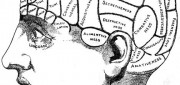
"A Duty to Remember, a Right to Forget? Memory Manipulations and the Law" Christoph Bublitz Martin Dresler Neuroscience...
April 10, 2015
"A Duty to Remember, a Right to Forget? Memory Manipulations and the Law" Christoph Bublitz Martin Dresler Neuroscience...
What Use Are Flashbulb Memories?
April 9, 2015
Overall, it was those flashbulb memories that participants said were most significant to them (usually their memories of receiving private news), that were associated with more functions, such as for self-identity and bonding with other people. In contrast, the self-reported detail of memories was not associated with their having more function. "This suggests," the researchers said, "that the functions of flashbulb memories are less about the shared societal reality and more about highly individual...
April 9, 2015
Overall, it was those flashbulb memories that participants said were most significant to them (usually their memories of receiving private news), that were associated with more functions, such as for self-identity and bonding with other people. In contrast, the self-reported detail of memories was not associated with their having more function. "This suggests," the researchers said, "that the functions of flashbulb memories are less about the shared societal reality and more about highly individual...
Memory: People are Hopeless at Drawing the Apple Logo
April 8, 2015
Apple's iconic apple, featuring a bitten-off chunk, is one of the most recognisable logos in the world. And with the company's ubiquitous products increasing in popularity, we're exposed to the famous fruit image more frequently than ever. Yet a new study finds that while all this exposure provokes confidence in our memories for the logo, it fails to translate into accurate recall. Before reading on, test your own memory. Adam Blake and his colleagues asked 85 undergrads – a mix of Apple and PC users...
April 8, 2015
Apple's iconic apple, featuring a bitten-off chunk, is one of the most recognisable logos in the world. And with the company's ubiquitous products increasing in popularity, we're exposed to the famous fruit image more frequently than ever. Yet a new study finds that while all this exposure provokes confidence in our memories for the logo, it fails to translate into accurate recall. Before reading on, test your own memory. Adam Blake and his colleagues asked 85 undergrads – a mix of Apple and PC users...
Psychologists Use Magic to Study the Illusory Feeling of Free Choice
April 7, 2015
Most of the time, when a magician asks you to "pick a card" she makes it feel as though you have a free choice, but you don't really. The authors of a new paper say this is a microcosm for many real-life situations in which we feel free to choose, but in fact our choices are heavily influenced and constrained. Jay Olson, a magician and psychologist, and his colleagues, have put a classic card trick technique under the spotlight as a way to study the psychology behind this experience of illusory free...
April 7, 2015
Most of the time, when a magician asks you to "pick a card" she makes it feel as though you have a free choice, but you don't really. The authors of a new paper say this is a microcosm for many real-life situations in which we feel free to choose, but in fact our choices are heavily influenced and constrained. Jay Olson, a magician and psychologist, and his colleagues, have put a classic card trick technique under the spotlight as a way to study the psychology behind this experience of illusory free...
Writing About Your Emotional Pain Could Make You Feel Worse
April 6, 2015
Some of us tend to brood over painful experiences. Others distract themselves, taking on more work, for example, or watching videos. In my experience, brooders think distractors are uninsightful people avoiding their problems (read “more troubled than I am”) and distractors think brooders are wallowing, tiresome, and way more troubled. Still worse, brooding is thought to be a female failing and distraction male (some research backs this up). The judgments fly. Natasha Odou, at Australian National...
April 6, 2015
Some of us tend to brood over painful experiences. Others distract themselves, taking on more work, for example, or watching videos. In my experience, brooders think distractors are uninsightful people avoiding their problems (read “more troubled than I am”) and distractors think brooders are wallowing, tiresome, and way more troubled. Still worse, brooding is thought to be a female failing and distraction male (some research backs this up). The judgments fly. Natasha Odou, at Australian National...
Yuval Noah Harari and Daniel Kahneman: A Conversation
April 5, 2015
"Once you really solve a problem like direct brain-computer interface ... when brains and computers can interact directly, that's it, that's the end of history, that's the end of biology as we know it. Nobody has a clue what will happen once you solve this. If life can break out of the organic realm into the vastness of the inorganic realm, you cannot even begin to imagine what the consequences will be, because your imagination at present is organic. So if there is a point of Singularity, by definition,...
April 5, 2015
"Once you really solve a problem like direct brain-computer interface ... when brains and computers can interact directly, that's it, that's the end of history, that's the end of biology as we know it. Nobody has a clue what will happen once you solve this. If life can break out of the organic realm into the vastness of the inorganic realm, you cannot even begin to imagine what the consequences will be, because your imagination at present is organic. So if there is a point of Singularity, by definition,...


