-
Arbitration
- FL: Appellate Court Upholds Constitutionality of Med Mal Cap if Arbitration...
Christopher J. Robinette, TortsProf Blog  Delegation Agreements, Separability, Schein II, and the October...
Philip J. Loree Jr., Loree Reinsurance and Arbitration Law Forum Is Manifest Disregard Alive and Well in the Second...
J.P. Duffy IV and Philip Danziger, Kluwer Arbitration Blog
- FL: Appellate Court Upholds Constitutionality of Med Mal Cap if Arbitration...





Menu
Why we [LexisNexis] Acquired Ravel Law
Continue reading...Financial Times: Artificial Intelligence Closes In On The Work Of Junior Lawyers
Continue reading...Law Schools and Law Students Both Benefit from Hands-on Experiential Learning Programs
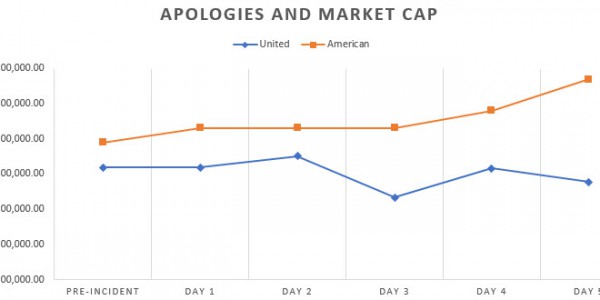
Continue reading...@United and @AmericanAir Prove #Apology Theory
Continue reading...What Solo and Small Firms Should Know About Artificial Intelligence
Continue reading...

Recent Posts
Grandfather of Behavioral Economics, Prof. Danny Kahneman, Remembered
Research psychologist who transformed "economics into a true behavioral science rather than a mere mathematical exercise" passed this week. With Prof. Tversky, he exposed hard-wired, universal brain "kinks" that predictably impact human decisions, particularly under stress and uncertainty. In almost child-like experiments, they explored and catalogued brain shortcuts like loss-aversion: why "does the loss of $100 hurt about twice as much as the gaining of $100 brings pleasure?" Kahneman recapped...
Continue reading...
Research psychologist who transformed "economics into a true behavioral science rather than a mere mathematical exercise" passed this week. With Prof. Tversky, he exposed hard-wired, universal brain "kinks" that predictably impact human decisions, particularly under stress and uncertainty. In almost child-like experiments, they explored and catalogued brain shortcuts like loss-aversion: why "does the loss of $100 hurt about twice as much as the gaining of $100 brings pleasure?" Kahneman recapped...
Continue reading...
Don Philbin Recognized as a Thought Leader in Mediation by Who's Who Legal Again
Don Philbin
Who's Who Legal has been researching mediation for over a decade and I appreciate the repeated recognition as a thought leader. #WWL2023 #Mediation #ThoughtLeadership #DisputeResolution #DonPhilbin
Continue reading...
Don Philbin
Who's Who Legal has been researching mediation for over a decade and I appreciate the repeated recognition as a thought leader. #WWL2023 #Mediation #ThoughtLeadership #DisputeResolution #DonPhilbin
Continue reading...
Don Philbin Listed Again in Who's Who Legal: Commercial Mediation Report 2022 and Thought Leaders 2023
Don Philbin
I’m delighted to again be included as one of the top commercial mediators and thought leaders in Who's Who Legal: Commercial Mediation Report 2022 (listed since 2011) and Thought Leaders 2023. There are some fine honorees and many friends on these comparatively short lists. Congratulations. https://whoswholegal.com/digital-editions/wwl-commercial-mediation-2022
Continue reading...
Don Philbin
I’m delighted to again be included as one of the top commercial mediators and thought leaders in Who's Who Legal: Commercial Mediation Report 2022 (listed since 2011) and Thought Leaders 2023. There are some fine honorees and many friends on these comparatively short lists. Congratulations. https://whoswholegal.com/digital-editions/wwl-commercial-mediation-2022
Continue reading...
Don Philbin Included in Texas Super Lawyers
I'm honored to be included in the Super Lawyers lists for 13 consecutive years in mediation.
Continue reading...
I'm honored to be included in the Super Lawyers lists for 13 consecutive years in mediation.
Continue reading...
-
Negotiation
- Madonna Sued for Late Concert Start
Myanna Dellinger, ContractsProf Blog  Negotiating the American Constitution (1787-1789) Coalitions,...
Carrie Menkel-Meadow, SSRN Like A Dog
Cass R. Sunstein, SSRN
- Madonna Sued for Late Concert Start
-
Mediation
- Alternative Dispute Resolution pioneer Frank G. Evans...
Adam Faderewski, Texas Bar Blog  Article on What Probate Courts Cite: Lessons from the New York...
Gerry W. Beyer, Wills, Trusts & Estates Prof Blog How AI Enables Stronger Litigation
Susan L. Shin, Property Casualty 360
- Alternative Dispute Resolution pioneer Frank G. Evans...


