Popular Posts
- Dewey & LeBoeuf Post-Mortem Will Likely Drag On
Wall Street Journal - The Guardian: Decision Quicksand
The Guardian  Defining The Role Of The Hospital-Medical Staff Standing Neutral
Richard J. Webb, Healthcare Neutral
- Dewey & LeBoeuf Post-Mortem Will Likely Drag On





Menu
Neurologically Speaking, Narcissists Are Needy
By Douglas Keene, The Jury Room, August 5, 2015
This post has been viewed 2,210 times.
This post has been viewed 2,210 times.
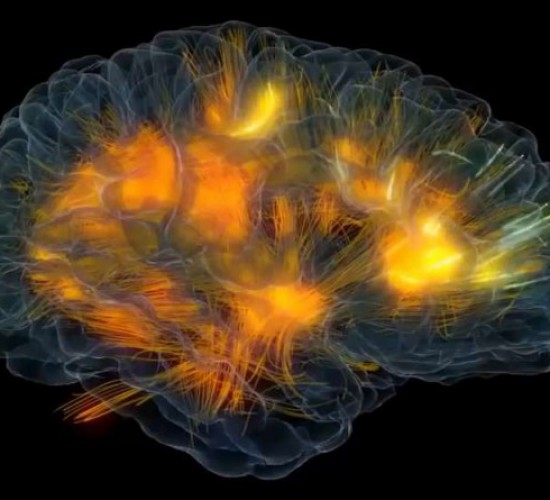
We’ve written about narcissists a fair amount here and today’s post shows us that the brains of narcissists are indeed very special—but not in a good way since they have “weakened frontostriatal connectivity”. But you probably knew that already. It’s a sort of neural disconnect, say the authors, between the self and reward. That disconnect may lead the narcissist to seek excessive reassurance from others.
Researchers from the University of Kentucky at Lexington recruited 50 undergraduate students and asked them to complete the Narcissistic Personality Index. Then they completed a specialized form of MRI with the participants: diffusion tensor imaging (a tool to measure the amount of connectivity between different brain areas). A very simplistic explanation of the technology is that it produces a spiderweb-like visualization of connections between different areas of the brain—you can literally see how much various parts of the brain are communicating.
* * *
So, the participants who have completed a measure of narcissism are lying in the MRI machine and having the number of connections between these two areas of the brain measured. Narcissists would say they have very high self-esteem and if that were true, they would have a high number of connections between these two parts of the brain since someone with high self-esteem would internally say nice things about themselves often.
Alas for the narcissists, the specialized brain scan did not show they had strong self-esteem. Instead, the higher the participants scored on the narcissism measure, the fewer connections they had between these two areas of the brain.
Read original articleTags:


