





Menu
Cognitive
Now Nanotechnology Can Detect Alzheimer’s Disease Early
January 21, 2015
A new type of brain scan which can detect the toxins which cause Alzheimer’s disease has been developed by scientists at Northwestern University. The test, which uses nanotechnology, identifies the early signs of dementia and could be used to both monitor and combat the disease. The areas of the brain which contain the amyloid beta toxins are seen on the brain scan as large dark patches. The new test is a breakthrough because previously it was only possible to detect the amyloid plaques...
January 21, 2015
A new type of brain scan which can detect the toxins which cause Alzheimer’s disease has been developed by scientists at Northwestern University. The test, which uses nanotechnology, identifies the early signs of dementia and could be used to both monitor and combat the disease. The areas of the brain which contain the amyloid beta toxins are seen on the brain scan as large dark patches. The new test is a breakthrough because previously it was only possible to detect the amyloid plaques...
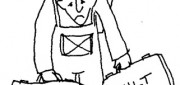
Guilt Drives People To Work The Hardest
January 20, 2015
People prone to feeling guilty are amongst the hardest workers, a new study finds. Not only that but people prone to feeling...
January 20, 2015
People prone to feeling guilty are amongst the hardest workers, a new study finds. Not only that but people prone to feeling...
The Weird Reason It’s Hard to Empathise And Be Logical At The Same Time
January 19, 2015
When the brain activates the network of neurons involved in empathising, it suppresses the network used for cold, hard analysis. The reverse is also true: activating the brain’s analytical networks reduces the ability to empathise. These conclusions come from a study published in the journal Neuroimage, which is the first to find that we are constrained in our ability to be analytical and empathetic at the same time (Jack et al., 2012).
January 19, 2015
When the brain activates the network of neurons involved in empathising, it suppresses the network used for cold, hard analysis. The reverse is also true: activating the brain’s analytical networks reduces the ability to empathise. These conclusions come from a study published in the journal Neuroimage, which is the first to find that we are constrained in our ability to be analytical and empathetic at the same time (Jack et al., 2012).
Reconcile System 1 & 2 Thinking
January 15, 2015
“If your gut reaction is different from the decision you reach after more deliberative processing, it is important to reconcile this inconsistency. If you let your gut rule, something as simple as whether a choice is framed as a gain or a loss might influence a decision. But if you ignore your gut and completely base your decision only on a cold calculation of the costs and benefits, you may be ignoring internal warning signs that ‘something isn’t right,’ such as the omission of the decision’s...
January 15, 2015
“If your gut reaction is different from the decision you reach after more deliberative processing, it is important to reconcile this inconsistency. If you let your gut rule, something as simple as whether a choice is framed as a gain or a loss might influence a decision. But if you ignore your gut and completely base your decision only on a cold calculation of the costs and benefits, you may be ignoring internal warning signs that ‘something isn’t right,’ such as the omission of the decision’s...
In the Hands of Fate: How Some Clients Cope With Difficult Decisions
January 14, 2015
In order for a case to reach the point where a resolution is being negotiated or mediated, it must’ve involved some serious, seemingly intractable issues that split the parties apart. Your client may feel helpless about the situation, feeling that fate’s responsible for the resolution, not the parties involved. When and how to settle a case can be difficult decisions. Clients probably feel stressed and uncomfortable at a negotiation or mediation session. One reason is that they don’t want...
January 14, 2015
In order for a case to reach the point where a resolution is being negotiated or mediated, it must’ve involved some serious, seemingly intractable issues that split the parties apart. Your client may feel helpless about the situation, feeling that fate’s responsible for the resolution, not the parties involved. When and how to settle a case can be difficult decisions. Clients probably feel stressed and uncomfortable at a negotiation or mediation session. One reason is that they don’t want...
Landeo on Tort Law and Economics
January 13, 2015
Claudia Landeo (Alberta-Department of Economics) has posted to SSRN Law and Economics and Tort Law: Theory and Experiments. The abstract provides: In tort litigation, delayed settlement or impasse imposes high costs on the parties and society. Litigation institutions might influence social welfare by affecting the likelihood of out-of-court settlement and the potential injurers' investment in product safety. An appropriate design of litigation institutions and tort reform requires good knowledge...
January 13, 2015
Claudia Landeo (Alberta-Department of Economics) has posted to SSRN Law and Economics and Tort Law: Theory and Experiments. The abstract provides: In tort litigation, delayed settlement or impasse imposes high costs on the parties and society. Litigation institutions might influence social welfare by affecting the likelihood of out-of-court settlement and the potential injurers' investment in product safety. An appropriate design of litigation institutions and tort reform requires good knowledge...
Nudge the Legal Decision Maker
January 12, 2015
The Book: Thaler and Sunstein Nudge Us Toward a New Way of Looking at Influence Thaler and Sunstein begin with a broad definition, describing a nudge as "any factor that significantly alters the behavior of humans." Of course, that takes in the full spectrum of persuasion and influence, but the difference in the focus of their book is the strategy of subtly steering choices toward better results while still preserving that choice. Within that setting, the strategic role is played by a "choice architect,"...
January 12, 2015
The Book: Thaler and Sunstein Nudge Us Toward a New Way of Looking at Influence Thaler and Sunstein begin with a broad definition, describing a nudge as "any factor that significantly alters the behavior of humans." Of course, that takes in the full spectrum of persuasion and influence, but the difference in the focus of their book is the strategy of subtly steering choices toward better results while still preserving that choice. Within that setting, the strategic role is played by a "choice architect,"...
Small Talk Can Result in Big Benefits
January 12, 2015
Small talk is a skill. Like any skills, you need to practice to get better at it. Professor Carducci offers these suggestions: He says to start small, with a simple greeting or compliment which can build into a conversation. Try to be nice, not brilliant. You don’t need to be funny or witty. A good way to practice is to talk to someone who’s alone and begin a conversation. Have something to say. If you think you have nothing to say you may be self-conscious and self-critical. Carducci...
January 12, 2015
Small talk is a skill. Like any skills, you need to practice to get better at it. Professor Carducci offers these suggestions: He says to start small, with a simple greeting or compliment which can build into a conversation. Try to be nice, not brilliant. You don’t need to be funny or witty. A good way to practice is to talk to someone who’s alone and begin a conversation. Have something to say. If you think you have nothing to say you may be self-conscious and self-critical. Carducci...
Reciprocity: Are Toddlers Noble Savages?
January 11, 2015
The bluestreak cleaner wrasse is a trusting fish. When a large predator swims into its cleaning station, the tiny wrasse will often enter the gills and mouth of the “client,” picking off ectoparasites, dead skin and stray bits of mucus. The wrasse gets a meal; the client gets cleaned; everyone wins, provided nobody bites. This is a story of direct reciprocity. Nature is full of such stories, from the grooming of Sri Lankan macaques to the sharing of blood by vampire bats. In fact, such reciprocity...
January 11, 2015
The bluestreak cleaner wrasse is a trusting fish. When a large predator swims into its cleaning station, the tiny wrasse will often enter the gills and mouth of the “client,” picking off ectoparasites, dead skin and stray bits of mucus. The wrasse gets a meal; the client gets cleaned; everyone wins, provided nobody bites. This is a story of direct reciprocity. Nature is full of such stories, from the grooming of Sri Lankan macaques to the sharing of blood by vampire bats. In fact, such reciprocity...
The Role of Emotions in Effective Negotiations
January 5, 2015
A simple view of negotiation presents a cold transaction between what one person has and what the other person is willing to pay for it. If the price is right, the deal gets done. As anyone who has recently bought a car or sold a house knows, however, negotiations are rarely so dispassionate. As soon as the checkbook comes out a flood of emotions comes out with it—fear, anxiety, competiveness, anger, annoyance—all of which can influence what either side is willing to accept. Emotions such...
January 5, 2015
A simple view of negotiation presents a cold transaction between what one person has and what the other person is willing to pay for it. If the price is right, the deal gets done. As anyone who has recently bought a car or sold a house knows, however, negotiations are rarely so dispassionate. As soon as the checkbook comes out a flood of emotions comes out with it—fear, anxiety, competiveness, anger, annoyance—all of which can influence what either side is willing to accept. Emotions such...


