





Impasse in Mediation
This post has been viewed 4,564 times.
Why does impasse occur in mediation? In my experience as a commercial mediator, impasse most often flows from a combination of cognitive biases and flawed risk assessments.
Cognitive Biases
The human mind works in mysterious ways. Research in psychology and economic behaviour continues to uncover myriad ways in which the mind deviates from norms or rationality in judgement. Daniel Kahneman’s Thinking Fast and Slow is required reading for commercial mediators. Even a glance at the Wikipedia entry for List of Cognitive Biases will be cause for caution. Some of these cognitive biases are frequently evident in mediated negotiations.
- Loss aversion – People are more sensitive to loss than gain. In settlement discussions there is a tendency for both sides to consider any compromise as a loss.
- Overconfidence effect – A person’s subjective confidence in their judgement is greater than the scientific accuracy of that judgement. The impact of this bias on BATNA (Best Alternative To a Negotiated Agreement) and risk assessment is obvious.
- Reactive Devaluation – Negotiators tend to devalue a proposal if it comes from the other side. A typical example in mediation is the plaintiff’s rejection of the defendant’s “final offer” because the plaintiff thinks, “if they offered that they must have more.”
- Confirmation bias – This is the tendency to search for or interpret information in a way that confirms one’s preconceptions. Besides, individuals often discredit information that does not support their views. Lawyers, in my experience, are often prone to this bias, and it impacts their risk assessments.
Flawed Risk Assessment
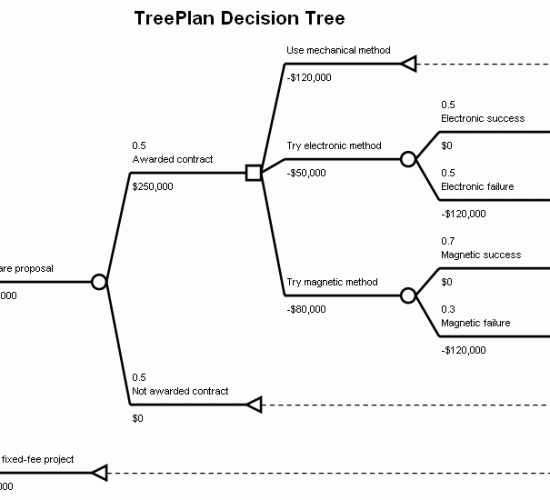
Disputing parties will want to carefully consider their BATNA as they prepare for a mediated negotiation. Reconsideration requires them to accurately and realistically assess what will happen if settlement efforts fail. Decision Tree Analysis is a helpful tool for probing a parties’ BATNA.
All too often, though, people are overly optimistic in their use of the Decision Tree tool. The result: plaintiffs value their case too highly, and defendants severely undervalue their exposure. Complete preparation for mediation will see lawyers and their clients considering other scenarios in which the possible outcomes at trial are less favourable than their initial assessment.
Read original articleTags:


