





Menu
Predictive Analytics
Doing Data Science with coLaboratory
August 31, 2014
Building products and making decisions based on data is at the core of what we do at Google. Increasingly common among fields such as journalism and government, this data-driven mindset is changing the way traditionally non-technical organizations do work. In order to bring this approach to even more fields, Google Research is excited to be a partner in the coLaboratory project, a new tool for data science and analysis, designed to make collaborating on data easier. Created by Google Research,...
August 31, 2014
Building products and making decisions based on data is at the core of what we do at Google. Increasingly common among fields such as journalism and government, this data-driven mindset is changing the way traditionally non-technical organizations do work. In order to bring this approach to even more fields, Google Research is excited to be a partner in the coLaboratory project, a new tool for data science and analysis, designed to make collaborating on data easier. Created by Google Research,...
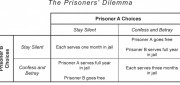
Legal Theory Lexicon: The Prisoners’ Dilemma
August 31, 2014
One of the most useful tools in analyzing legal rules and the policy problems to which they apply is game theory. The basic...
August 31, 2014
One of the most useful tools in analyzing legal rules and the policy problems to which they apply is game theory. The basic...
Do Robot Lawyers Dream of Billable Seconds?
August 26, 2014
A program entitled Do Robot Lawyers Dream of Billable Seconds? was held 21 August 2014 at ILTA 2014: International Legal Technology Association Annual Educational Conference, in Nashville, Tennessee, USA. The Website for the program does not appear to have a stable, publicly available URL, but those with a username and password may be able to access the site at: http://ilta.ebiz.uapps.net/personifyebusiness/Default.aspx?productid=1795754 Here is a summary of the program, from the program’s...
August 26, 2014
A program entitled Do Robot Lawyers Dream of Billable Seconds? was held 21 August 2014 at ILTA 2014: International Legal Technology Association Annual Educational Conference, in Nashville, Tennessee, USA. The Website for the program does not appear to have a stable, publicly available URL, but those with a username and password may be able to access the site at: http://ilta.ebiz.uapps.net/personifyebusiness/Default.aspx?productid=1795754 Here is a summary of the program, from the program’s...

Update on North Carolina Bar’s Resistance to Change
August 24, 2014
In a previous post, I discussed the North Carolina’s Bar fight against an amendment to the definition of the practice of law that...
August 24, 2014
In a previous post, I discussed the North Carolina’s Bar fight against an amendment to the definition of the practice of law that...

TyMetrix 360 Enhanced to Meet Growing Needs of Insurance Claims Industry
August 18, 2014
Datacert|TyMetrix, the global leader in Enterprise Legal Management, announced today a significant number of enhancements...
August 18, 2014
Datacert|TyMetrix, the global leader in Enterprise Legal Management, announced today a significant number of enhancements...
The Robots Are Coming For Your Jobs
August 16, 2014
Just because there aren’t as many people applying to law school, doesn’t mean you should apply to law school. Even if there are fewer people to compete with, what can your feeble skills do against the machines? From the annals my large “I told you so” files, a few years ago I predicted that the “Watson” technology — computers that can answer complex and subtle questions like Watson on Jeopardy — could be a threat to associate jobs. Now, that technology appears closer than ever...
August 16, 2014
Just because there aren’t as many people applying to law school, doesn’t mean you should apply to law school. Even if there are fewer people to compete with, what can your feeble skills do against the machines? From the annals my large “I told you so” files, a few years ago I predicted that the “Watson” technology — computers that can answer complex and subtle questions like Watson on Jeopardy — could be a threat to associate jobs. Now, that technology appears closer than ever...
IBM’s Watson Takes on the Law
August 11, 2014
It sounds like Mike Ross of "Suits" could soon have some competition when it comes to encyclopedic knowledge of the law. According to Susan Beck in our flagship publication, The American Lawyer, International Business Machines Corp. is developing the Watson Debater—a computer that can synthesize information and argue different sides of an issue, she says. Many already know Watson from its Jeopardy fame, but this time Big Blue's machine has taken the LSAT. The senior vice president and general...
August 11, 2014
It sounds like Mike Ross of "Suits" could soon have some competition when it comes to encyclopedic knowledge of the law. According to Susan Beck in our flagship publication, The American Lawyer, International Business Machines Corp. is developing the Watson Debater—a computer that can synthesize information and argue different sides of an issue, she says. Many already know Watson from its Jeopardy fame, but this time Big Blue's machine has taken the LSAT. The senior vice president and general...

The Productization of Legal Services
August 10, 2014
The July/August issue of Law Practice magazine is now out, the theme is “Big Ideas,” and one of the big ideas included...
August 10, 2014
The July/August issue of Law Practice magazine is now out, the theme is “Big Ideas,” and one of the big ideas included...

Algorithm Predicts US Supreme Court Decisions 70% of Time
July 31, 2014
A legal scholar says he and colleagues have developed an algorithm that can predict, with 70 percent accuracy, whether the US Supreme...
July 31, 2014
A legal scholar says he and colleagues have developed an algorithm that can predict, with 70 percent accuracy, whether the US Supreme...
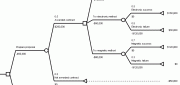
Lawyer and Nonlawyer Susceptibility to Framing Effects in Out-of-Court Civil Litigation Settlement
July 24, 2014
Settling a legal dispute out of court is typically a good result for both parties. However, many disputes do not settle:...
July 24, 2014
Settling a legal dispute out of court is typically a good result for both parties. However, many disputes do not settle:...


