





Menu
Data
Settlement Malpractice
June 11, 2019
Lawyers routinely settle lawsuits or advise their clients about settlement. One might expect, therefore, that clients routinely complain about some aspect of their lawyers’ settlement services. Ten years of data from eleven jurisdictions paint a vivid, different picture: although the vast majority of civil lawsuits are resolved through negotiated settlements and although complaints against lawyers are common, fewer than 1% of reported legal malpractice cases and only about 1.5% of Bar complaints...
American Law Firms in Transition: Trends, Threats and Strategies
June 10, 2019
American Law Firms: Trends, Threats and Strategies takes a sweeping, incisive view of law firms' uneven progress after the Great Recession and analyzes the five elements that will determine their success or failure in the next decade: culture, character, practices, systems and leaders. Studying every critical aspect of law firms from income trends to attorney attrition rates and from gender bias to leadership development, this book shows how law firms have struggled to adapt to rapidly changing...
Pepperdine Hosts International Conference For Dispute Resolution Teachers, Scholars, And Leaders
June 9, 2019
The Straus Institute for Dispute Resolution at Pepperdine Law School, ranked #1 by U.S. News & World Report for 13 of the past 15th years, will host a landmark conference on June 18-19, 2019: Appreciating Our Legacy and Engaging theFuture: An International Conference for Dispute Resolution Teachers, Scholars, and Leaders. Participants will compare perspectives on four decades of change in managing and resolving conflict. The Co-Chairs of the Conference are: Tom...
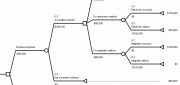
Risk & Rigor: A Lawyer’s Guide to Decision Trees for Assessing Cases and Advising Clients
June 7, 2019
Risk and Rigor offers practical guidance to lawyers, mediators, and clients on using decision trees to more rigorously think...
June 7, 2019
Risk and Rigor offers practical guidance to lawyers, mediators, and clients on using decision trees to more rigorously think...
The Effects of the Extant Clauses Limiting Auditor Liability on Audit Fees and Overall Reporting Quality
June 6, 2019
Regulators and shareholders generally oppose any restriction on clients' rights to sue their auditors, believing that such restrictions would impair reporting quality. However, the evidence suggests that the opposition to limitation of liability agreements (LLAs) between clients and auditors is likely unwarranted. Specifically, the evidence indicates that LLAs are beneficial to clients by lowering their audit fees. More importantly, we find no evidence that they impair financial reporting quality...
Sorry, Laws Protecting Doctors Who Apologize Don’t Lessen Litigation
June 5, 2019
Laws intended to reduce malpractice litigation by protecting doctors who want to apologize don’t work, according to a new Vanderbilt analysis of proprietary insurance data. It turns out people sue for money and an apology doesn’t change that reality. In fact, apologies may raise the risk of claims. “The idea is simply that if providers could just say they’re sorry, that’s what patients really want. They really don’t care about punishing the doctor in a financial context, they care...
Sludge Audits
June 2, 2019
Consumers, employees, students, and others are often subjected to “sludge”: excessive or unjustified frictions, such as paperwork burdens, that cost time or money; that may make life difficult to navigate; that may be frustrating, stigmatizing, or humiliating; and that might end up depriving people of access to important goods, opportunities, and services. Because of behavioral biases and cognitive scarcity, sludge can have much more harmful effects than private and public institutions anticipate....

FutureLaw 2019: Rearranging the Bits of the LegalTech Revolution
June 1, 2019
The annual FutureLaw conference — produced by CodeX, the Stanford Center for Legal Informatics, with the sponsorship...
June 1, 2019
The annual FutureLaw conference — produced by CodeX, the Stanford Center for Legal Informatics, with the sponsorship...
Towards a Better Understanding of Lawyers’ Judgmental Biases in Client Representation
May 28, 2019
Previous research demonstrates that lawyers and law students are, on average, prone to overconfidence bias and self-serving judgments of fairness when they take on a representative lawyering role. This is the first study to investigate individual differences in susceptibility to these biases. Expanding on two previous experiments (Loewenstein, et al., 1993; Babcock, Loewenstein & Issacharoff, 1998), and utilizing as our sample 468 law students from twelve geographically diverse U.S. law schools,...

Bloomberg Law Says It Has ‘Significantly’ Expanded its Litigation Analytics
May 26, 2019
Bloomberg Law says it has today rolled out a significant expansion of its Litigation Analytics suite, now providing analytics...
May 26, 2019
Bloomberg Law says it has today rolled out a significant expansion of its Litigation Analytics suite, now providing analytics...


