





Menu
Data
Managing a Law Practice in the Age of Intelligent Machines
May 6, 2018
Managing a Law Practice in the Age of Intelligent Machines represents my attempt to speak to those lawyers who are perplexed by the number of things they are reading and hearing about law office automation and artificial intelligence replacing lawyers. That can happen and I cite one example where it has happened already. But many, hopefully most, lawyers will be using automation and AI to better serve their clients. I hoped to provide a general framework of when automation makes sense and how the law evolves...

Moneyball for Lawyers: Changing the Game with Analytics
May 6, 2018
The use of analytics has permeated into various industries, from baseball to banking, but could it be invaluable to lawyers...
May 6, 2018
The use of analytics has permeated into various industries, from baseball to banking, but could it be invaluable to lawyers...
Justia Adds Lawyer Ratings and Reviews To Its Lawyer Lawyer Directory
May 5, 2018
The legal research and information site Justia this week added peer-based lawyer ratings and reviews as part of the Justia Lawyer Directory. The new Justia Lawyer Rating and Reviews is based solely on attorney-to-attorney reviews and is intended to provide clients with valuable insights from peers and colleagues personally familiar with the lawyers’ work, Justia says. Ratings are displayed as a badge on attorney profiles in the directory. Attorneys may also display the badge on their websites...
The Person Who Most Disrupted Law This Decade
May 5, 2018
If Avvo had done nothing more than introduce lawyer ratings to consumers, it would have been disruptive. But it did a lot more. I am going to go out on a limb and put forth this proposition: No one individual has been more directly responsible for disrupting the legal industry over the past decade than Mark Britton. As he exits as CEO of Avvo, he leaves the legal world a different place than it was when he founded the company in 2007. His idea — that lawyers should be rated on a scale of one to 10 to help...
Sherwin on the Rationality of Promising
May 4, 2018
Emily L. Sherwin (Cornell University - Law School) has posted The Rationality of Promising (J.L. & Publ. Pol’y (Forthcoming) on SSRN. Here is the abstract: This essay first examines various conceptions of promissory obligation, which suggest a range of possible benefits associated with promising. Theories of temporally extended practical rationality suggest that to obtain benefits of this kind, it may be rational for a promisor to treat his or her promise as binding. The difficulty is that,...

Study Finds Texas Lawyers Satisfied With Careers
May 4, 2018
A new survey study by Milan Markovic and Gabriel Plicket finds that Texas lawyers generally remain fairly satisfied after...
May 4, 2018
A new survey study by Milan Markovic and Gabriel Plicket finds that Texas lawyers generally remain fairly satisfied after...
The Law and Big Data
May 3, 2018
To illustrate Big Data’s potentially pervasive effects, examples can be drawn from many legal perspectives, including civil litigants and banking regulators. For example, there are several ways in which law can be “personalized” using Big Data. The personalized law business model would involve synthesizing large amounts of data regarding the course and resolution of all manner of legal issues. Sophisticated predictive analytic software would be used to analyze data and compare it to the facts...
Statutory Interpretation on the Bench: A Survey of Forty-Two Judges on the Federal Courts of Appeals
May 2, 2018
This Article reports the results of a survey of a diverse group of forty-two federal appellate judges concerning their approaches to statutory interpretation. The study reveals important differences between their approaches and the approach that the Supreme Court purports to take. It also helps to substantiate the irrelevance of the enduring, but now-boring, textualism-versus-purposivism debate. None of the judges we interviewed was willing to associate himself or herself with “textualism” without...
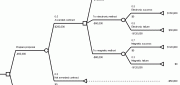
Informed Decision-Making in Judicial Mediation and the Assessment of Litigation Risk
May 2, 2018
While much has been written about how mediators can guide parties through impasse, the popular literature is less attentive...
May 2, 2018
While much has been written about how mediators can guide parties through impasse, the popular literature is less attentive...

Product Liability Litigation Report Focuses on Burgeoning Medical Device and Pharmaceutical Product Case Filings
April 30, 2018
MDL-associated cases comprise more than 97% of medical device/pharmaceutical cases filed in 2017, with only 667 of the 29,185...
April 30, 2018
MDL-associated cases comprise more than 97% of medical device/pharmaceutical cases filed in 2017, with only 667 of the 29,185...


