





SCOTUS Throws a Haymaker at “Class Arbitration”
This post has been viewed 2,859 times.
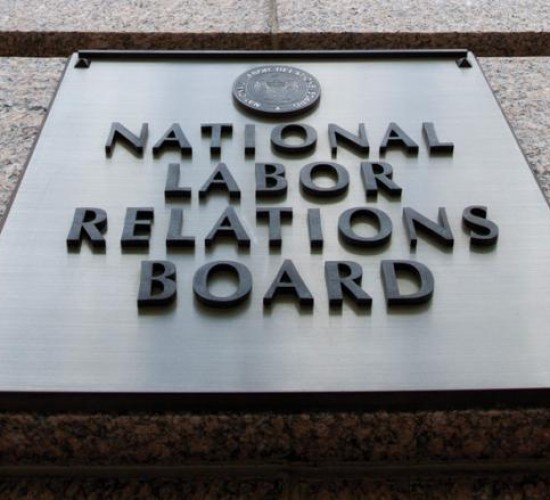
The majority of a divided (5-4) SCOTUS recently held that a waiver of “class arbitration” in agreed terms of employment is indeed enforceable. In doing so, the Court advanced the legal analysis of “class arbitration” that was begun several years ago by Justice Antonin Scalia, confirmed that arbitration is fundamentally a creature of contract, and concluded, among other things, that the NLRA was not in conflict with and did not override or displace the FAA.
The asserted tension between (a) the right of employees under the National Labor Relations Act (“NLRA”) to engage in “concerted activities,” NLRA § 7, 29, U.S.C. § 157, and (b) the right of a contracting party under the Federal Arbitration Act (“FAA”) to enforce a bilateral arbitration agreement, was teed-up for consideration by the Supreme Court on October 2, 2017, when oral argument was heard in three related cases — Epic Systems Corp. v. Lewis, No. 16-285; Ernst & Young v. Morris, No. 16-300; NLRB v. Murphy Oil USA, Inc., No. 16-307. The Supreme Court held on May 21, 2018 that there was no such tension, and that an employment-related contractual waiver of class arbitration was enforceable. Epic Systems Corp. v. Lewis, 2018 BL 178768, 2018 U.S. LEXIS 3086 (May 21, 2018). The Court relied in part on its prior comments concerning the fundamental nature of arbitration as a less formal method of bilateral dispute resolution.
Read original articleTags:


