





Data-Driven Decision-Making: From Fine Wine to Fine Arbitrators
This post has been viewed 3,226 times.
Arbitrator Intelligence Reports
AI Reports are still in the development phase, and the nature and scope of AI Reports will inevitably evolve over time, particularly as AI’s base of data expands. Nevertheless, it is already easy to see from some preliminary mock-ups how AI Reports will help promote more data-driven decisions about arbitrator appointments.
By way of preview, consider the following chart regarding a (hypothetical) arbitrator’s approach to document production:
Figure A
(based on hypothetical data—for illustrative purposes only)
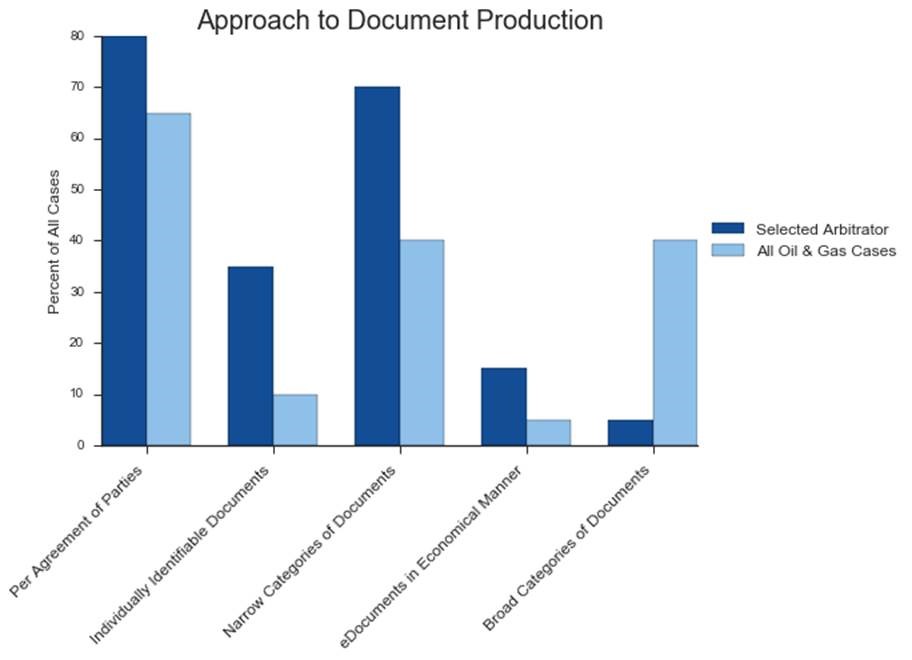
This basic chart provides a systematic comparison of the arbitrator’s historical practice in granting document production (the light blue bars to the left), as compared with the document production practices of all arbitrators in the sample oil and gas cases (the dark blue bars to the right).
Conclusion
When Arbitrator Intelligence was first conceived, major law firms stated (unabashedly!) that they hoped this project would fail. AI would be seeking to gather and make widely available information that they sold to their clients, information that signaled their value-added expertise, information that distinguished them from lesser competitors. And they did not want the competition.
Today, given the size and complexity of the market, the reaction is quite different. Even the leading law firms with the largest networks for collecting information recognize that there is no such thing as “enough information” about arbitrators. In-house counsel are increasingly demanding more than mere intuition to justify arbitrator appointments. They want concrete data and analysis that their colleagues use in making other business decisions and that they will especially need if they have to explain an unexpected result to management. Even arbitral institutions, which also appoint arbitrators, increasingly need more information to optimize their appointments and remain competitive.
Read original articleTags:


