





The Machine Intelligence Behind Gboard
This post has been viewed 4,164 times.
Most people spend a significant amount of time each day using mobile-device keyboards: composing emails, texting, engaging in social media, and more. Yet, mobile keyboards are still cumbersome to handle. The average user is roughly 35% slower typing on a mobile device than on a physical keyboard. To change that, we recently provided many exciting improvements to Gboard for Android, working towards our vision of creating an intelligent mechanism that enables faster input while offering suggestions and correcting mistakes, in any language you choose.
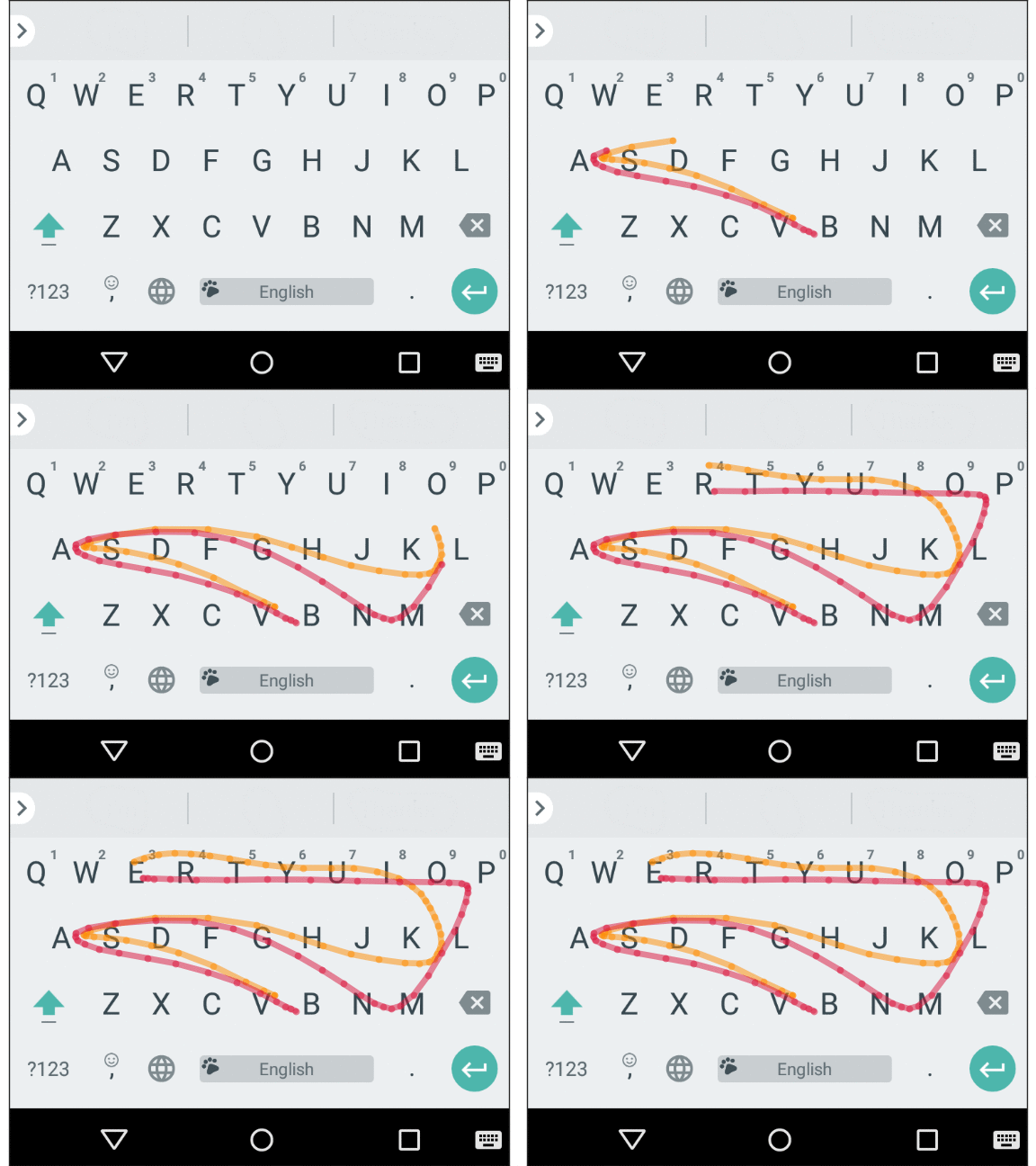
With the realization that the way a mobile keyboard translates touch inputs into text is similar to how a speech recognition system translates voice inputs into text, we leveraged our experience in Speech Recognition to pursue our vision. First, we created robust spatial models that map fuzzy sequences of raw touch points to keys on the keyboard, just like acoustic models map sequences of sound bites to phonetic units. Second, we built a powerful core decoding engine based on finite state transducers (FST) to determine the likeliest word sequence given an input touch sequence. With its mathematical formalism and broad success in speech applications, we knew that an FST decoder would offer the flexibility needed to support a variety of complex keyboard input behaviors as well as language features. In this post, we will detail what went into the development of both of these systems.
Tags:


