





Samsung Shut Out Of Arbitration In Recent Consumer Class Actions
This post has been viewed 2,869 times.
Two federal circuit courts of appeals have recently found that documents Samsung included in boxes with consumer products did not effectively create an arbitration agreement. In both cases, the documents had titles indicating they related to safety and warranty information, and therefore were ruled insufficient to put consumers on notice of any obligation to arbitrate.
In Noble v. Samsung Electronics America, Inc., 2017 WL 838269 (3d Cir. March 3, 2017), the putative class action complained that the battery life of the Samsung Galaxy Gear S Smartwatch was significantly less than advertised. In response, Samsung moved to compel individual arbitration with the class representative and to dismiss the class action. Samsung relied on an arbitration clause, including a class waiver, contained on pages 97-102 of a “Health and Safety and Warranty Guide” that was packaged in the box with the watch. The district court denied the motion to compel and the Third Circuit affirmed. Critically, the appellate court found that under New Jersey state law, there had been no meeting of the minds with respect to arbitration, because the Warranty Guide “did not appear to be a bilateral contract, and the terms were buried in a manner that gave no hint to a consumer that an arbitration provision was within.” The court distinguished this case from enforceable shrink-wrap or click-wrap agreements by saying those agreements clearly inform consumers that they contain contractual terms.
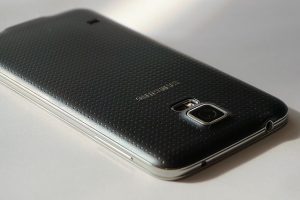
Just a few weeks earlier, the Ninth Circuit had reached a similar result with regard to Samsung’s ability to compel arbitration of class claims about its phones. In Norcia v. Samsung Telecommunications America, LLC, 2017 WL 218027 (9th Cir. Jan. 19, 2017), the putative class complained of misrepresentations regarding the Galaxy S4 phone. Samsung moved to compel arbitration. The district court denied the motion, and the Ninth Circuit affirmed. Mr. Norcia’s receipt from the Verizon Wireless store stated “I am agreeing to …settlement of disputes by arbitration and other means instead of jury trials and other important terms in the Customer Agreement.” But the Customer Agreement only mentioned Verizon Wireless, so Samsung could not avail itself of that language. Inside the phone’s box was a 101-page brochure called “Product Safety & Warranty Information,” which included a statement that “all disputes with Samsung arising in any way from this limited warranty or the sale, condition or performance of the products shall be resolved exclusively through final and binding arbitration.”
Tags:


