





Incredible 3-D Map Shows 300,000 Molecules in a Single Synapse
This post has been viewed 3,188 times.
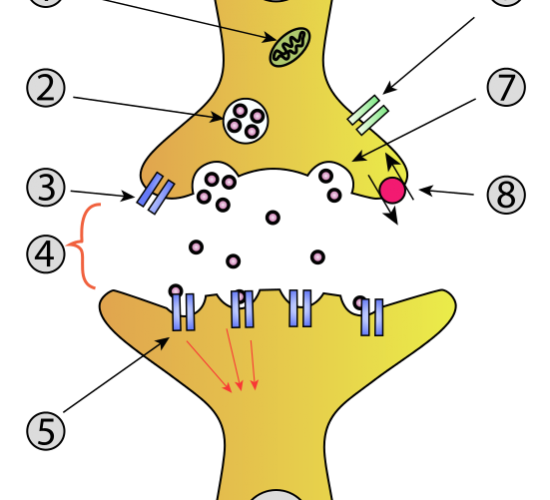
Synapses are the key to communication inside the brain. These microscopic gaps are where signals jump from one neuron to another. Your brain has trillions of them. Now, scientists have created a 3-D portrait of a single synapse in unprecedented molecular detail.
A synapse is like two ports on opposite sides of a busy river. Cargo—in this case chemicals called neurotransmitters—is bundled up and brought to the waterfront where it’s sent across to the other side. This takes a lot of specialized machinery. Synapses are built from thousands of proteins, and each type of protein does a specific job to help this transport business go smoothly.
A new study, published today in Science, takes a close look at the export side of the synapse. Scientists applied a variety of techniques to brain tissue from rats to visualize 300,000 proteins in an “average” synapse. They also tracked how the numbers of different types of proteins changed as synaptic vesicles—the tiny packing containers filled with neurotransmitters—bring their cargo to the gap, dump it, and get recycled to be used again.
Read original articleTags: synapse, Synapses


