Advance Sheet: Risk Assessment
This post has been viewed 2,812 times.
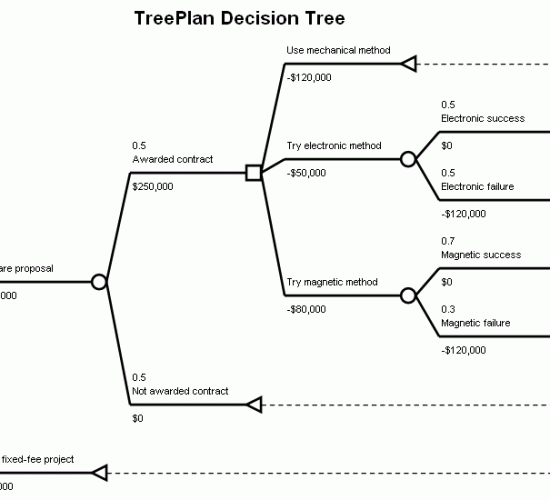
Risk numbers do have some value, however, in calculating settlement figures. As a defendant you can always take the maximum (or, if you prefer, the reasonably achievable maximum) damages the plaintiff may get and discount them by whatever generous or cheap percentage you believe is a plaintiff’s chance of success. So a prospective $10 million judgment, if all goes right for the plaintiff in a toss-up case, may be worth no more than $5 million, less the time value of money (assuming no prejudgment interest). Your own unrecoverable attorney fees may be added to the figure and, presto, you have a not-to-exceed number for settlement purposes.
One reason the numbers are left so vague is that so many unpredictable elements go into litigating. There is just so much that can go wrong (or right), so much that is unforeseeable. There are surprise emails, careless witnesses, and especially mistaken assumptions. Mark Twain was famous for saying that “Truth is stranger than fiction, but it is because Fiction is obliged to stick to possibilities; Truth isn’t.” Ordinary assumptions are dangerous in litigation. Possibly the very reason there is litigation in the first place is that someone wrongly assumed events would transpire as they usually do. To put it more simply, paraphrasing Yogi Berra, in litigation you don’t know nothin’. There is no end to what can happen.
Fortunately, clients’ expectations tend to be reasonable, particularly the expectations of clients used to the litigation drill. What they want when asking for a risk assessment is a review of the presumed facts and the law, not which way the vagaries of litigation may cut. In most cases, they seem just as likely to cut for you as against you. Perhaps a closer look at the parties or the facts or a first encounter with the judge may counsel otherwise. The other side’s lead witness could be a real sweetheart, bound to be beloved of the jury. Or that jumpy witness on your side may seem unlikely to perform well and may, if you listen closely, cause you to wonder if he’s hiding something or is liable to collapse on the witness stand or some such thing. Your 60-40 may then become 50-50 or worse. But most of the time, these matters are not separately considered.
Read original articleTags: