





Menu
Practice
Podcast: The Future of the Professions: An Interview with Richard and Daniel Susskind
February 14, 2016
So what is a professional? Wikipedia explains the term this way: "A professional is a member of a profession or any person who earns their living from a specified activity. The term also describes the standards of education and training that prepare Future of the Professionsmembers of the profession with the particular knowledge and skills necessary to perform the role of that profession. In addition, most professionals are subject to strict codes of conduct enshrining rigorous ethical and moral...
Profession at a Crossroads: Will Lawyers Lead, Follow or Get Out of the Way?
February 13, 2016
In October, I wrote about Richard and Daniel Susskind’s new book, The Future of the Professions: How Technology Will Transform the Work of Human Experts. The Susskinds will be visiting the U.S. (Cambridge and New York City) in a few weeks, so I thought it would be worth a little more time exploring the implications of their work. (Read my Q&A with Richard Susskind.) The Susskinds identify a number of trends that run across professions:
Law Firms Risk Obsolescence By Following Kodak’s Path
February 11, 2016
New York Times: Law Firms Risking Obsolescence, Report Says, by Elizabeth Olson: As the legal industry faces sluggish demand for services, weakened pricing power and falling productivity, a new report is warning that the country’s law firms are failing to make “bold, proactive changes.” The report, compiled annually by the Center for the Study of the Legal Profession at the Georgetown University Law Center, said that firms needed to overcome resistance to change and even shake up the partnership...
Law Firms Risking Obsolescence, Report Says
February 11, 2016
As the legal industry faces sluggish demand for services, weakened pricing power and falling productivity, a new report is warning that the country’s law firms are failing to make “bold, proactive changes.” The report, compiled annually by the Center for the Study of the Legal Profession at the Georgetown University Law Center, said that firms needed to overcome resistance to change and even shake up the partnership structure if they are to thrive. Comparing the situation to the Eastman...
State of the Legal Market – Conclusion
February 10, 2016
Few observers of the legal market would disagree that, at least since 2008, the market has changed in fundamental ways. Not only has demand growth slowed dramatically, but the competitive dynamics of the market have shifted as well. Clients who once deferred to their outside law firms on all key decisions impacting the legal services they purchased no longer do so. Instead, clients increasingly demand that outside counsel offer more efficient services with more transparency into both work processes...
State of the Legal Market – Fixation on Growth versus Market Differentiation and Profitability
February 9, 2016
In the face of the significant shifts in market dynamics that have impacted the legal industry since 2008, perhaps the most noticeable trend has been an apparent fixation on growth, as many firms appear to have adopted growth as their primary strategy. Law firm mergers and lateral acquisitions have surged in recent years. Indeed, through December 3, 2015, Altman Weil reported there had been 84 mergers involving U.S. law firms, the largest number since the consultancy began tracking merger activity nine...

State of the Legal Market – Growing Segmentation Within Law Firm Market Share
February 8, 2016
In our 2014 Report on the State of the Legal Market, we noted that “there is now strong evidence that the U.S. legal market...
February 8, 2016
In our 2014 Report on the State of the Legal Market, we noted that “there is now strong evidence that the U.S. legal market...
Robot Invasion
February 6, 2016
Law firms can choose to either reject or embrace artificial intelligence – but ready or not, the tech revolution has arrived. Automation is an idea that either sparks genuine excitement or deep fear in lawyers. Having a computer extract the menial, repetitive tasks from a lawyer’s daily grind is a satisfying idea. But a future dominated by artificial intelligence (AI) – where lawyers’ analytical expertise is outstripped by the machines around them – is a troubling one. When doomsday...
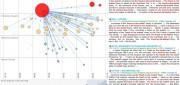
Update on Harvard-Ravel Digitization Project: Calif. Cases Now Live
February 6, 2016
Last October, I wrote here about the joint initiative between Harvard Law School and Ravel Law to digitize and make available...
February 6, 2016
Last October, I wrote here about the joint initiative between Harvard Law School and Ravel Law to digitize and make available...

Current State of the Legal Market –
February 4, 2016
The essentially stagnant growth in demand for law firm services (as described above) – a condition that has more-or-less...
February 4, 2016
The essentially stagnant growth in demand for law firm services (as described above) – a condition that has more-or-less...


