





Menu
Practice
Relevance and Importance of Neuroscience for Law
February 7, 2017
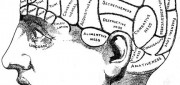
Michael S. Pardo and Dennis Patterson (University of Alabama School of Law and European University Institute) has posted The Promise of Neuroscience for Law: 'Overclaiming' in Jurisprudence, Morality, and Economics (Patterson, Dennis, and Michael S. Pardo (eds.). Philosophical Foundations of Law and Neuroscience. Oxford University Press, 2016, 231-248) on SSRN. Here is the abstract: Claims for the relevance and importance of neuroscience for law are stronger than ever. Notwithstanding persuasive...
NY Times: Facing Fierce Competition For Clients, Elite Law Firms Take Unusual Steps To Bolster Their Brands
February 5, 2017
New York Times Deal Book: With Competition Fierce, Even Elite Law Firms Resort to the Unusual, by Elizabeth Olson: America’s law firms, even the most prominent, are mired in an era of noticeably modest growth and volatility in the industry, and 2017 promises to be no better. Fierce competition is prompting firms to take unusual steps to bolster their profiles. Top firms are hiring groups of lawyers to expand specific practice areas, changing pay practices, jettisoning or demoting some partners...
Why Lawyers Are Bad At Relationships
February 5, 2017
I don’t know about you, but recently I have increasingly realized that the philosophy of conflict resolution that I practice daily as a litigator is an awful template for resolution of conflict with loved ones.[1] While the divorce rate in the United States generally is quite high, it runs higher amongst attorneys. Certainly we must be responsible for not imputing a highly imperfect system of conflict resolution at home, but we are imperfect beings and it takes focus and attention to not impute...
Why Smart People Don’t Multitask
February 4, 2017
I have often doubted those who say they mulitask well. This is because working memory has only a limited number of slots,...
February 4, 2017
I have often doubted those who say they mulitask well. This is because working memory has only a limited number of slots,...
10 Years Out, Report Says Recession’s Impact on Firms is Clear
February 4, 2017
In 2017, it’s a buyer’s market when it comes to legal services, according to a report released Thursday by the Center for the Study of the Legal Profession at the Georgetown University Law Center and Thomson Reuters’ Peer Monitor. The report examines the challenges the legal industry has faced in the 10 years since the start of the Great Recession, and how law firms have had to change the way they operate to accommodate their clients’ budgetary needs. Perhaps the most significant challenge...

The Future of Artificial Intelligence
February 1, 2017
In the 1960s, most research on computers centered on how to ease daily tasks, but RAND was also exploring how to develop...
February 1, 2017
In the 1960s, most research on computers centered on how to ease daily tasks, but RAND was also exploring how to develop...
Big Data Gets Bigger: 5 Ways to Employ Legal Analytics
February 1, 2017
Technology advances in both law and the wider world will mean greater reliance on analytics in legal technology. Big data is just getting, well, bigger. And while legal technology’s progress has been slow in relation to technology changes in the wider world, legal professionals are increasingly turning to one technique to handle emerging big data challenges of the day. That approach is data analytics—a practice in which data is extracted for categorization and analysis by a variety of techniques...
How Service, Not Tech, Is Disrupting Legal
February 1, 2017
Service (getservice.com) is my favorite new company. In fact, my experience using Service was so positive that it has impacted the way I’m thinking about legal disruption — and Service isn’t even a legal tech company per se. But before I explain the broader implications, first a word on Service. So, as the annual Legaltech show in New York approaches (which, this year, has rebranded as Legalweek), some of the companies I’m following most closely are tech enabled service companies...
The Defining Tech Trends of the Next Decade
January 30, 2017
As innovation and capital converge, technologies with life-changing potential can emerge over time. In this video, we asked some of the attendees of Goldman Sachs’ sixth annual Private Internet Company Conference about the technology trends that will define the way we live and work in the next decade. The video features: Jennifer Tejada, CEO, PagerDuty Rob Solomon, Chairman and CEO, GoFundMe Chris Altchek, Co-Founder and CEO, Mic Lise Buyer, Founder, Class V Group Ryan Nolan, Investment...
ROSS Artificial Intelligence Outperforms Westlaw and LexisNexis, Study Finds
January 28, 2017
ROSS Intelligence, the artificial intelligence legal research platform, outperforms Westlaw and LexisNexis in finding relevant authorities, in user satisfaction and confidence, and in research efficiency, and is virtually certain to deliver a positive return on investment. These are among the findings of benchmark report being released today by the technology research and advisory company Blue Hill Research pitting ROSS against the two dominant legal research services. The full report will be available...


