





Menu
Law Firm
Artificial Intelligence and Legal Analytics
July 3, 2017
The field of artificial intelligence (AI) and the law is on the cusp of a revolution that began with text analytic programs like IBM's Watson and Debater and the open-source information management architectures on which they are based. Today, new legal applications are beginning to appear and this book - designed to explain computational processes to non-programmers - describes how they will change the practice of law, specifically by connecting computational models of legal reasoning directly with...
July 3, 2017
The field of artificial intelligence (AI) and the law is on the cusp of a revolution that began with text analytic programs like IBM's Watson and Debater and the open-source information management architectures on which they are based. Today, new legal applications are beginning to appear and this book - designed to explain computational processes to non-programmers - describes how they will change the practice of law, specifically by connecting computational models of legal reasoning directly with...
Richard Susskind Interview for Tomorrow’s Lawyers
July 2, 2017
Richard Susskind Interview for Tomorrow’s Lawyers 2nd Edition at the 2017 CLOC (Corporate Legal Operations Consortium) Conference in Las Vegas
July 2, 2017
Richard Susskind Interview for Tomorrow’s Lawyers 2nd Edition at the 2017 CLOC (Corporate Legal Operations Consortium) Conference in Las Vegas
Overcapacity In Legal Education
June 25, 2017
Between 1971 and 2010, the average entering 1L class at an ABA-accredited law school was 246 students with a very narrow band of fluctuation. The high-water mark was 262 in 2010. Every year since 2012 has set a new historical low. As the chart above shows, the average has tumbled by a staggering 31%. ... I think we will see a few more law school closures, but not nearly many as the grim economics might suggest. Why? Some law schools have responded to the applicant downturn by creating new non-JD...
June 25, 2017
Between 1971 and 2010, the average entering 1L class at an ABA-accredited law school was 246 students with a very narrow band of fluctuation. The high-water mark was 262 in 2010. Every year since 2012 has set a new historical low. As the chart above shows, the average has tumbled by a staggering 31%. ... I think we will see a few more law school closures, but not nearly many as the grim economics might suggest. Why? Some law schools have responded to the applicant downturn by creating new non-JD...
The Number Of Law School Graduates Has Fallen 28%
June 24, 2017
The ABA just released 10-months out employment data for the class of 2016. The percentages of grads employed in full-time/long term Bar Passage Required and JD Advantage jobs is up (72.5% compared to 70.1% in 2015). However, the total number of these jobs is down (28,029 to 26,923). Is this good news for law schools? Not really. The employment percentage is up only because the number of law grads is dropping faster than the number of jobs. But both numbers — grads (supply) and jobs (demand)...
June 24, 2017
The ABA just released 10-months out employment data for the class of 2016. The percentages of grads employed in full-time/long term Bar Passage Required and JD Advantage jobs is up (72.5% compared to 70.1% in 2015). However, the total number of these jobs is down (28,029 to 26,923). Is this good news for law schools? Not really. The employment percentage is up only because the number of law grads is dropping faster than the number of jobs. But both numbers — grads (supply) and jobs (demand)...

Legal Industry Survey Rates How Clients Use Directories
June 24, 2017
Directories and rankings were named as the sixth most influential factor by clients when asked to indicate the importance...
June 24, 2017
Directories and rankings were named as the sixth most influential factor by clients when asked to indicate the importance...
88% Of Law Firms Have ‘Chronically Underperforming Lawyers’
June 23, 2017
Fifty-two percent of law firm leaders responding to Altman Weil’s Law Firms in Transition Survey said their equity partners are not sufficiently busy. Sixty-two percent said nonequity partners are not busy enough, and 25 percent said associates don’t have enough work. Eighty-eight percent of the leaders said they have “chronically underperforming lawyers” at their firms. When asked why, 82 percent identified weak business development skills and 59 percent said flat or declining market...
June 23, 2017
Fifty-two percent of law firm leaders responding to Altman Weil’s Law Firms in Transition Survey said their equity partners are not sufficiently busy. Sixty-two percent said nonequity partners are not busy enough, and 25 percent said associates don’t have enough work. Eighty-eight percent of the leaders said they have “chronically underperforming lawyers” at their firms. When asked why, 82 percent identified weak business development skills and 59 percent said flat or declining market...
Just 7.5% of Firms Using AI, But Half Pursuing Other Innovations
June 18, 2017
Just 7.5 percent of law firms say they are making use of legal artificial-intelligence tools, while another 29 percent are beginning to explore their options for using AI, according to a survey of firms with 50 or more lawyers conducted by the management consulting firm Altman Weil. For the firms that said they are pursing innovations, the survey asked them to describe what they are doing. I won’t repeat all the responses here, but let me offer a sample: Use of IBM Watson. Developing...
June 18, 2017
Just 7.5 percent of law firms say they are making use of legal artificial-intelligence tools, while another 29 percent are beginning to explore their options for using AI, according to a survey of firms with 50 or more lawyers conducted by the management consulting firm Altman Weil. For the firms that said they are pursing innovations, the survey asked them to describe what they are doing. I won’t repeat all the responses here, but let me offer a sample: Use of IBM Watson. Developing...
Artificial Intelligence is Here – and it is Set to Transform Legal Practice
June 10, 2017
When South Korea’s reigning Go master was beaten by artificial intelligence last year I published a column about the future of law. While a computer defeating a gaming champion seemed innocuous enough, the gravity of that event, given the complexity of Go, was significant. It has flow-on effects for all businesses, including law firms. Little over a year later, a Google-powered AI has just defeated China’s best Go player, Ke Jie, who is also the world’s No.1 player. It demonstrates the continued...
June 10, 2017
When South Korea’s reigning Go master was beaten by artificial intelligence last year I published a column about the future of law. While a computer defeating a gaming champion seemed innocuous enough, the gravity of that event, given the complexity of Go, was significant. It has flow-on effects for all businesses, including law firms. Little over a year later, a Google-powered AI has just defeated China’s best Go player, Ke Jie, who is also the world’s No.1 player. It demonstrates the continued...

Managing Partners Say Their Lawyers Are Underperforming and Slow to Change
June 10, 2017
The leaders of Big Law firms in the US don’t seem to be very happy with recent changes — or lack thereof — in their...
June 10, 2017
The leaders of Big Law firms in the US don’t seem to be very happy with recent changes — or lack thereof — in their...
Ravel Law Unveils New Tool That Measures Law Firm Success
June 9, 2017
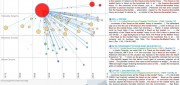
Ravel unveiled its Firm Analytics suite, which purports to rank law firms by case volume and winning percentages across practice...
June 9, 2017
Ravel unveiled its Firm Analytics suite, which purports to rank law firms by case volume and winning percentages across practice...


