





Menu
Arbitration
Second Circuit Refuses to Confirm Foreign Arbitration Award
August 26, 2015
By summary order issued on July 1, 2015, the Second Circuit for the second time in the same case declined to confirm an award issued by an arbitral panel in Brazil. VRG Linhas Aereas S.A. v. MatlinPatterson Global Opportunities Partners II L.P., No. 14-3906-CV, 2015 WL 3971177 (2d Cir. July 1, 2015) affirming No. 11 Civ. 0198 (MGC), 2014 WL 4928929 (S.D.N.Y. Oct. 2, 2014). The Second Circuit previously remanded the matter to the district court to determine if the parties had agreed to arbitrate...
August 26, 2015
By summary order issued on July 1, 2015, the Second Circuit for the second time in the same case declined to confirm an award issued by an arbitral panel in Brazil. VRG Linhas Aereas S.A. v. MatlinPatterson Global Opportunities Partners II L.P., No. 14-3906-CV, 2015 WL 3971177 (2d Cir. July 1, 2015) affirming No. 11 Civ. 0198 (MGC), 2014 WL 4928929 (S.D.N.Y. Oct. 2, 2014). The Second Circuit previously remanded the matter to the district court to determine if the parties had agreed to arbitrate...

In Determining Arbitrability, Conjugation and Context Count
August 25, 2015
In Russell v. Citigroup, Inc., 748 F.3d 677 (6th Cir. 2014), the Sixth Circuit held that an employee who signed an arbitration...
August 25, 2015
In Russell v. Citigroup, Inc., 748 F.3d 677 (6th Cir. 2014), the Sixth Circuit held that an employee who signed an arbitration...
Developments on Judicial Review under the FAA after Hall Street
August 24, 2015
In Hall Street Associates, L.L.C. v Mattel, Inc., 552 U.S. 576, 581–84 (2008), the U.S. Supreme Court held that the grounds provided under the Federal Arbitration Act (FAA) for vacating or modifying arbitration awards are exclusive and may not be supplemented by an agreement of the parties. In holding that parties cannot contractually expand judicial review of arbitration awards under the FAA beyond what is provided for in the statute, the Court explicitly noted that it was addressing only “the...
August 24, 2015
In Hall Street Associates, L.L.C. v Mattel, Inc., 552 U.S. 576, 581–84 (2008), the U.S. Supreme Court held that the grounds provided under the Federal Arbitration Act (FAA) for vacating or modifying arbitration awards are exclusive and may not be supplemented by an agreement of the parties. In holding that parties cannot contractually expand judicial review of arbitration awards under the FAA beyond what is provided for in the statute, the Court explicitly noted that it was addressing only “the...
Ninth Circuit Reverses Mid-Arbitration Removal of Arbitrator
August 21, 2015
In In re Sussex, 781 F.3d 1065 (9th Cir. 2015), the U.S. Court of Appeals for the Ninth Circuit issued a writ of mandamus directing the district court to vacate its order removing the arbitrator in Sussex v. Turnberry/MGM Grand Towers, LLC, No. 2:08-cv-00773-MMD-PAL (D. Nev. Dec. 31, 2013), discussed in the Summer 2014 article “Pre-Award Removal of an Arbitrator.” The district court complied with the writ on April 8, 2015, reinstating the arbitrator more than five years after his initial appointment. Sussex...
August 21, 2015
In In re Sussex, 781 F.3d 1065 (9th Cir. 2015), the U.S. Court of Appeals for the Ninth Circuit issued a writ of mandamus directing the district court to vacate its order removing the arbitrator in Sussex v. Turnberry/MGM Grand Towers, LLC, No. 2:08-cv-00773-MMD-PAL (D. Nev. Dec. 31, 2013), discussed in the Summer 2014 article “Pre-Award Removal of an Arbitrator.” The district court complied with the writ on April 8, 2015, reinstating the arbitrator more than five years after his initial appointment. Sussex...
Assessing the Strengths and Weaknesses of a Pending Arbitration
August 19, 2015
Arbitration has been described as old-time litigation on steroids—limited discovery, no depositions, few constrains on demonstratives, and decision makers who may or may not be attorneys. But arbitration is a wonderful dispute resolution mechanism provided you understand how it works. If you did not take an ADR course in law school, you will probably obtain your knowledge firsthand—namely by representing a client in a pending arbitration. That can be a scary proposition when the amount in controversy...
August 19, 2015
Arbitration has been described as old-time litigation on steroids—limited discovery, no depositions, few constrains on demonstratives, and decision makers who may or may not be attorneys. But arbitration is a wonderful dispute resolution mechanism provided you understand how it works. If you did not take an ADR course in law school, you will probably obtain your knowledge firsthand—namely by representing a client in a pending arbitration. That can be a scary proposition when the amount in controversy...

State Courts Disagree About Incorporating Arbitration Agreements By Reference
August 13, 2015
One way to challenge the very existence of an agreement to arbitrate is to say that the parties’ contract said nothing...
August 13, 2015
One way to challenge the very existence of an agreement to arbitrate is to say that the parties’ contract said nothing...
Should You Cut The Delegation Clause From Your Arbitration Agreement?
August 12, 2015
A recent report showed that less than half of arbitration agreements in the consumer financial arena include delegation clauses in their arbitration agreements. Two recent decisions from state high courts suggest that is a wise decision because courts do not like to enforce delegation clauses. (Reminder: a delegation clause gives the arbitrator explicit authority to decide issues of substantive arbitrability that would otherwise be decided by a court, like the enforceability and scope of the arbitration...
August 12, 2015
A recent report showed that less than half of arbitration agreements in the consumer financial arena include delegation clauses in their arbitration agreements. Two recent decisions from state high courts suggest that is a wise decision because courts do not like to enforce delegation clauses. (Reminder: a delegation clause gives the arbitrator explicit authority to decide issues of substantive arbitrability that would otherwise be decided by a court, like the enforceability and scope of the arbitration...
Arbitration Fireworks: Three Federal Circuits Refuse To Compel Arbitration
August 11, 2015
Three federal appellate courts recently affirmed lower courts’ refusal to compel arbitration. These cases show that the federal policy favoring arbitration is not absolute – the parties must have agreed to arbitrate the claims at issue and the defendant cannot have waived its right to arbitrate by engaging in significant discovery and motion practice. In Lloyd v. J.P. Morgan Chase & Co., __ F.3d __, 2015 WL 3937978 (2d Cir. June 29, 2015), the issue was whether putative class and collective...
August 11, 2015
Three federal appellate courts recently affirmed lower courts’ refusal to compel arbitration. These cases show that the federal policy favoring arbitration is not absolute – the parties must have agreed to arbitrate the claims at issue and the defendant cannot have waived its right to arbitrate by engaging in significant discovery and motion practice. In Lloyd v. J.P. Morgan Chase & Co., __ F.3d __, 2015 WL 3937978 (2d Cir. June 29, 2015), the issue was whether putative class and collective...
Texas: Arbitration Clause Between Attorney and Client Upheld
August 10, 2015
This post is authored by Lonnie Schooler with Jackson Walker. Lonnie is on the State Bar of Texas' ADR Section Council. Thanks to Lonnie for brining this decision to us and for providing this outstanding analysis of Royston, Rayzor, Vickery & Williams LLP v. Lopez. Introduction. The Texas Supreme Court on June 26, 2015, through Justice Johnson issued its unanimous decision in Royston, Rayzor, Vickery & Williams L.L.P. v. Lopez (which included a concurring opinion by Justice Guzman, joined...
August 10, 2015
This post is authored by Lonnie Schooler with Jackson Walker. Lonnie is on the State Bar of Texas' ADR Section Council. Thanks to Lonnie for brining this decision to us and for providing this outstanding analysis of Royston, Rayzor, Vickery & Williams LLP v. Lopez. Introduction. The Texas Supreme Court on June 26, 2015, through Justice Johnson issued its unanimous decision in Royston, Rayzor, Vickery & Williams L.L.P. v. Lopez (which included a concurring opinion by Justice Guzman, joined...
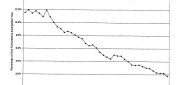
Reversing the Decline of the Civil Jury Trial
August 9, 2015
If you’ve been to a federal courthouse lately, you might have been struck by the pin-drop silence. Fewer than 1% of federal...
August 9, 2015
If you’ve been to a federal courthouse lately, you might have been struck by the pin-drop silence. Fewer than 1% of federal...


