





Menu
Blog Archives
California Grumbling at U.S. News
March 22, 2014
Only three of California's 19 law schools accredited by the American Bar Association improved on the U.S. News & World Report annual rankings this year, and the long view looks even worse. * * * Not a single California school has seen a cumulative increase in ranking during the past three years — notwithstanding that Stanford Law School; the University of California, Berkeley School of Law; the University of California at Los Angeles School of Law; and Pepperdine University School of Law each...
March 22, 2014
Only three of California's 19 law schools accredited by the American Bar Association improved on the U.S. News & World Report annual rankings this year, and the long view looks even worse. * * * Not a single California school has seen a cumulative increase in ranking during the past three years — notwithstanding that Stanford Law School; the University of California, Berkeley School of Law; the University of California at Los Angeles School of Law; and Pepperdine University School of Law each...
Even You Can Be Replaced by a Robot
March 22, 2014
There’s no question that the Internet has transformed the workplace, but according to a report by attorneys at Littler Mendelson, there’s another game-changer in the works: robotics. * * * “Increasingly, digital robots and software systems are replacing attorneys in the collection and classification of electronic evidence,” the authors write. “Meanwhile, other robotic systems generate massive amounts of data providing a digital reproduction of activities and events.”
March 22, 2014
There’s no question that the Internet has transformed the workplace, but according to a report by attorneys at Littler Mendelson, there’s another game-changer in the works: robotics. * * * “Increasingly, digital robots and software systems are replacing attorneys in the collection and classification of electronic evidence,” the authors write. “Meanwhile, other robotic systems generate massive amounts of data providing a digital reproduction of activities and events.”
How to Tell if Your Startup is Ready for Investment
March 22, 2014
Since 2005 startup accelerators have provided cohorts of startups with mentoring, pitch practice and product focus. However, accelerator Demo Days are a combination of graduation ceremony and pitch contest, with the uncomfortable feel of a swimsuit competition. Other than “I’ll know it when I see it,” there’s no formal way for an investor attending Demo Day to assess project maturity or quantify risks. Other than measuring engineering progress, there’s no standard language to communicate...
March 22, 2014
Since 2005 startup accelerators have provided cohorts of startups with mentoring, pitch practice and product focus. However, accelerator Demo Days are a combination of graduation ceremony and pitch contest, with the uncomfortable feel of a swimsuit competition. Other than “I’ll know it when I see it,” there’s no formal way for an investor attending Demo Day to assess project maturity or quantify risks. Other than measuring engineering progress, there’s no standard language to communicate...
Service Offers a Better Way to Search Federal Court Records than PACER
March 22, 2014
PacerPro provides a clean, modern interface to the PACER system. But PacerPro is more than just lipstick on a pig. It actually improves on the federal site through features such as real-time universal search, aggregated search results and one-click downloads of entire dockets. To achieve real-time universal search, PacerPro bypasses PACER's Case Locator. Instead, it logs in directly to all 214 court sites. Whereas the Case Locator will not find same-day data, PacerPro will. Search PacerPro by party...
March 22, 2014
PacerPro provides a clean, modern interface to the PACER system. But PacerPro is more than just lipstick on a pig. It actually improves on the federal site through features such as real-time universal search, aggregated search results and one-click downloads of entire dockets. To achieve real-time universal search, PacerPro bypasses PACER's Case Locator. Instead, it logs in directly to all 214 court sites. Whereas the Case Locator will not find same-day data, PacerPro will. Search PacerPro by party...
“Suck it” for $80,000 Alex
March 22, 2014
News reports from Florida tell us that confidentiality clauses in settlement agreements are enforceable. From the opinion in Gulliver Schools, Inc. v. Snay, which can be found here. And, a tip of the cap to Lowering the Bar ————————– On November 3, 2011, the parties executed a general release and a settlement agreement for full and final settlement of Snay’s claims, with the school to pay $10,000 in back pay to Snay with “Check # 1”; $80,000 to Snay as a “1099”...
March 22, 2014
News reports from Florida tell us that confidentiality clauses in settlement agreements are enforceable. From the opinion in Gulliver Schools, Inc. v. Snay, which can be found here. And, a tip of the cap to Lowering the Bar ————————– On November 3, 2011, the parties executed a general release and a settlement agreement for full and final settlement of Snay’s claims, with the school to pay $10,000 in back pay to Snay with “Check # 1”; $80,000 to Snay as a “1099”...
Online Justice Index Maps Legal Access in America
March 21, 2014
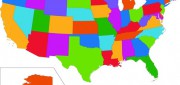
The National Center for Access to Justice has launched the Justice Index, an online project that maps the geography of justice...
March 21, 2014
The National Center for Access to Justice has launched the Justice Index, an online project that maps the geography of justice...
U.S. Courts Report Has High Tech Outlook
March 21, 2014
The 2013 report from Director of the Administrative Office of the U.S. Courts is out and it offers some insight into what’s to come. While the case management/electronic case files system is already energizing the way federal courts manage cases and documents, the transition to a next generation of the CM/ECF system is well underway, promising even more efficiency and integration among the appellate, district, and bankruptcy systems; and creating greater consistency and enabling more case-related...
March 21, 2014
The 2013 report from Director of the Administrative Office of the U.S. Courts is out and it offers some insight into what’s to come. While the case management/electronic case files system is already energizing the way federal courts manage cases and documents, the transition to a next generation of the CM/ECF system is well underway, promising even more efficiency and integration among the appellate, district, and bankruptcy systems; and creating greater consistency and enabling more case-related...
Baseball has the Best Rules: Using Arbitration to Solve FRAND Disputes
March 21, 2014
How to calculate Fair, Reasonable and Nondiscriminatory (FRAND) royalties seems like one of the most intractable problems firms, standard setting organizations and the courts are grappling with. No wonder, there is sparse authority and relatively few litigated cases. Two of the most thoughtful scholars on antitrust intellectual property issues — Professors Mark Lemley and Carl Shapiro — have weighed in and issued a paper outlining an interesting solution to the FRAND licensing problem...
March 21, 2014
How to calculate Fair, Reasonable and Nondiscriminatory (FRAND) royalties seems like one of the most intractable problems firms, standard setting organizations and the courts are grappling with. No wonder, there is sparse authority and relatively few litigated cases. Two of the most thoughtful scholars on antitrust intellectual property issues — Professors Mark Lemley and Carl Shapiro — have weighed in and issued a paper outlining an interesting solution to the FRAND licensing problem...
Time for Lawyers to Connect Like the Most Connected Man in the World
March 21, 2014
For lawyers that want to take a page from Dancy’s e-book, Nicole Black in the Future Lawyer saysits time for them to embrace wearable technology. “And not because I think these devices,” such as smart watches and Google Glass, “will be the latest and greatest thing—but because they have the potential to dramatically affect the practice of law in two very different ways,” she says. First, these tools can help lawyers tap into the endless resources on the Internet and information...
March 21, 2014
For lawyers that want to take a page from Dancy’s e-book, Nicole Black in the Future Lawyer saysits time for them to embrace wearable technology. “And not because I think these devices,” such as smart watches and Google Glass, “will be the latest and greatest thing—but because they have the potential to dramatically affect the practice of law in two very different ways,” she says. First, these tools can help lawyers tap into the endless resources on the Internet and information...

USNews Dispute Resolution Rankings [10th Straight No. 1 for Pepperdine]
March 21, 2014
Every year the USNews rankings come out and we love them or hate them depending on whether they favor us or not. And at least...
March 21, 2014
Every year the USNews rankings come out and we love them or hate them depending on whether they favor us or not. And at least...


