





Using Decision Tree Technology in Clinical Legal Education
This post has been viewed 5,305 times.
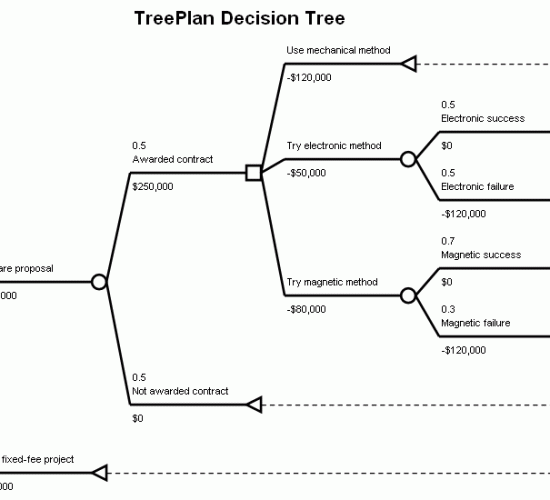
This is a new article by Professor Timothy Tarvin (Arkansas) called Combating Professional Error in Bankruptcy Analysis Through the Design and Use of Decision Trees in Clinical Pedagogy and can be found at 91 St. John’s L. Rev. 427 (2017). Here’s an excerpt from the intro:
Read original articleThe decision tree works well in the clinical setting because it is propositional. In other words, the decision tree is designed to introduce a logical series of propositions in the form of syllogisms. This format, represented as “if this, then that,” drives the process forward. The construction of the decision tree is designed to allow the sequence of questions to vary according to the responses chosen. The decision tree is conversational because its format engages users in an interactive exchange that directs the user towards a conclusion based on the responses supplied.
The uses and benefits of this decision tree technology in the clinical setting include: (1) protecting clients and students from professional error, (2) teaching students critical issues in legal analysis, (3) assisting clinical faculty in supervision, (4) improving risk management, (5) promoting access to justice, (6) fostering judicial economy, and (7) rehabilitating and reclaiming the image of lawyers as honored professionals. The prototype includes the questions to be posed, the universe of responses, and links to the relevant legal authority. The user’s ability to analyze a given issue is either confirmed or corrected by the decision tree.
Tags:


