





Argument Analysis: An Epic Day for Employers in Arbitration Case?
This post has been viewed 3,027 times.
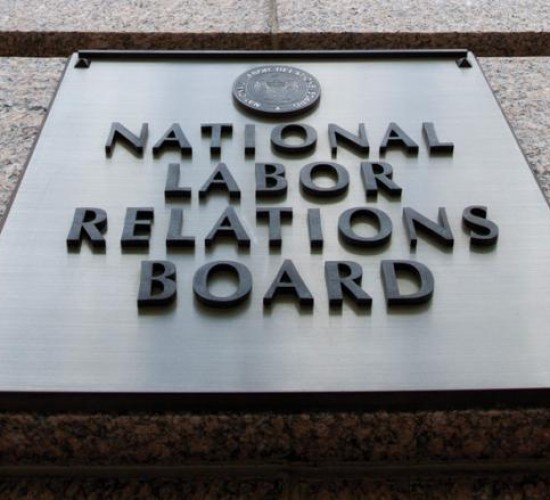
In the first oral argument of the new term, a divided Supreme Court seemed likely to uphold employment agreements that require an an employee to resolve a dispute with an employer through individual arbitration, waiving the possibility of proceeding collectively. The conflict among the justices could be captured by two exchanges this morning. The first came when Chief Justice John Roberts, in a back-and-forth with University of Virginia law professor Daniel Ortiz, who represented one of the employees in the case, observed that a decision in favor of Ortiz’s client would invalidate employment agreements covering 25 million people – a step that several of the justices would be reluctant to take, particularly given the court’s strong support of arbitration in recent years. Justice Stephen Breyer, on the other hand, had a very different concern: He told Paul Clement, who represented the employers in the case, that he had not seen a path for Clement’s clients to win without “undermining and changing radically” the labor laws that are the “entire heart of the New Deal.”
Today’s argument centered on two federal laws, both of which date back nearly a century. The first law, the Federal Arbitration Act, provides that arbitration agreements “shall be valid, irrevocable, and enforceable.” The second, the National Labor Relations Act, provides that employees have the right to engage in “concerted activities” for “mutual aid or protection.” During his 20 minutes at the lectern, Clement emphasized that the Supreme Court’s earlier cases provide a “well-trod path” to resolve the case: The FAA indicates that arbitration agreements should be enforced unless there is a clear contrary command from Congress, which is not present here.
Clement is not likely to get the votes of any of the four more liberal justices. He doesn’t need those votes, though, if he can garner the votes of the court’s five more conservative justices. He seems to have three of those votes – Roberts, Kennedy and Alito – but the two remaining justices – Justices Clarence Thomas and Neil Gorsuch – were silent today. Thomas has voted in favor of a broader reading of the FAA in earlier cases, but Gorsuch is harder to read. As a general matter, as Edith Roberts reported earlier this year, while on the court of appeals Gorsuch generally interpreted arbitration clauses “in light of the overriding presumption in favor of arbitration.” That track record, combined with his emphasis on relying on the plain text of a statute, could bode well for the employers in this case.
Read original articleTags:


