





New Research Explains Why Overthinking Can Hinder Creativity
This post has been viewed 3,556 times.
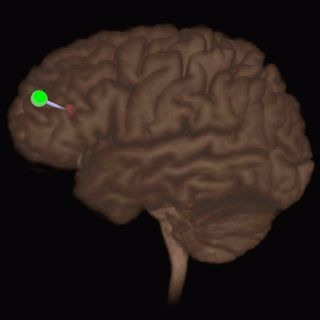
Researchers in the UK have discovered that using a targeted electric current to temporarily suppress a particular region of the frontal lobes called the left dorsolateral prefrontal cortex (DLPFC) helps to break the mental constraints linked to “rut-like thinking.” This process also increased creativity. The findings from researchers at Queen Mary University of London (QMUL) and Goldsmiths University of London were published June 7 online ahead of print in the journal Scientific Reports.
The DLPFC is involved in cerebral thinking and higher executive function. More specifically, this brain region plays a pivotal role in automating cognitive processes to solve problems by applying previously learned rules. Despite the efficiency of this type of automatic thinking, the DLPFC’s powers of automaticity can backfire if previously learned “rules” create roadblocks when someone needs to solve an unfamiliar problem that requires fresh ideas and thinking outside the box.
Tags:


