





Browsewrap Unenforceable and Motion to Compel Arbitration Denied
This post has been viewed 15,161 times.
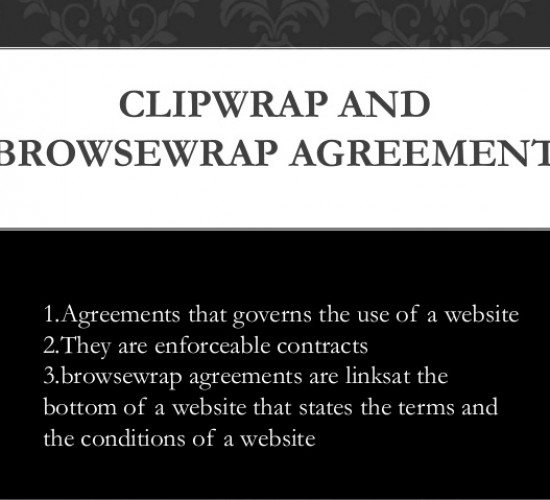
A recent California appellate court case, Long v. Provide Commerce, Inc., found that a browsewrap agreement containing an arbitration clause failed to provide notice sufficient for assent. The case is likely to be significant in shaping wrap contract doctrine because it is the first California appellate court decision which addresses “what sort of website design elements would be necessary or sufficient to deem a browsewrap agreement valid in the absence of actual notice.”
The plaintiff, Brett Long, purchased a floral arrangement on the ProFlowers.com website. The arrangement he purchased was advertised as a “completed assembly product” but he alleged that it was delivered as a “do-it yourself kit” which required assembly. He filed a class action lawsuit on behalf of California consumers. Provide, the owner and operator of the ProFlowers.com website, moved to compel arbitration pursuant to its Terms of Use which contained an arbitration clause.
The Terms of Use were accessible via a hyperlink titled TERMS OF USE at the bottom of each webpage. The hyperlink was in light green typeface on a lime green background along with other hyperlinks in the same format. In order to complete his order, Long had to input information and click through buttons which were displayed in a white box against the website’s lime green background. At the bottom of the box was the following notice, “Your order is safe and secure.” Below the white box was a dark green bar with a hyperlink stating SITE FEEDBACK in light green typeface. Below the dark green bar, at the bottom of each “checkout flow” page were two hyperlinks, PRIVACY POLICY and TERMS OF USE in the same light green typeface as the website’s lime green background.
Read original articleTags:


