





It is All in Your Perspective!
This post has been viewed 2,819 times.
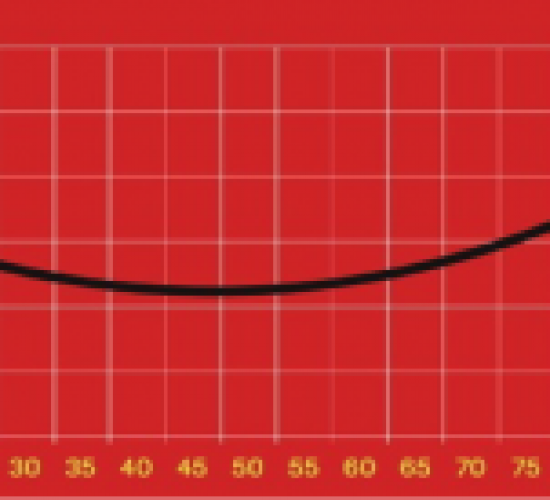
The December 2014 edition of The Atlantic contains an interesting article entitled “The Real Roots of Midlife Crisis” by Jonathan Rauch. In it, he notes that mid-life crisis is not a unique reality to the United States. Rather, it is a worldwide phenomenon explained by science and more particularly the “U” or happiness curve. (See graph below.)
Typically, when we are in our 30s and 40s, we feel that we are on top of the world (or slowly but surely getting there) moving forward and upwards in our personal and business lives. We are establishing ourselves both personally and professionally, gaining more responsibility (and thus hopefully more financial remuneration) in our professional lives and creating more stable long term relationships personally (family and kids). Hopefully, we are also healthy and so feel that we have all that we dreamed of when we were in our twenties and just starting out.
But then, as we enter our early to mid 40s, we begin to wonder “Is this it?”; “Is this all there is to life?” We suddenly realize that there may be more years of our lives behind us than in front of us. We begin to feel a little bit ungrateful, and small things start nagging at us- both physically and emotionally. We no longer feel invincible or immortal. The ordinariness and routines of life suddenly begin to gnaw at us. We think, “There has got to be something better!”
* * *
Thus, how we negotiate, (as well as what we negotiate about) and how our needs and interests are met in any dispute will vary with our age due to our perspective and location on the “U” curve. What may be important to a 30-something year old plaintiff or defendant may well not even be on the radar of a 60 something year old plaintiff or defendant. So, in any dispute, age DOES matter. Where one is on the “happiness” curve will affect the negotiation and its outcome. The same may be said for the particular neutral mediating the dispute; no doubt where she is on the curve may well affect her mediation style. Both are definitely something to consider.
Read original articleTags:


