


Menu
Neuroscience
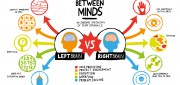
Are Law Schools Neglecting Half of the Brain?
June 16, 2013
The notion that law schools should teach more practical skills and hands-on training is in vogue these days. But Paula...
June 16, 2013
The notion that law schools should teach more practical skills and hands-on training is in vogue these days. But Paula...

ReInvent Law London 2013: STARTING NOW! Tweet Away!
June 14, 2013
We have some very exciting news to share about upcoming ReInvent Law London conference: This year's event will be on June...
June 14, 2013
We have some very exciting news to share about upcoming ReInvent Law London conference: This year's event will be on June...
ReInvent Law London 2013: Conference Schedule TOMORROW MORNING
June 13, 2013
We have some very exciting news to share about upcoming ReInvent Law London conference: This year's event will be on June 14th, at the CBI Conference Centre in central London – 12:30pm – 6:00pm with a reception to follow. That's 6:30am Central Time. Tickets are available now for FREE, but there are a limited number of seats so reserve your place now at ReInventLawLondon.com! ReInvent Law London will be featuring 20+ speakers, including: Richard Susskind, "The Past, Present, &...
Ramblings from A Neuro-Linguist: Putting Descartes Before The Horse
June 7, 2013
[Author's Warning: This entry involves references to and discussions about the system of Cartesian Coordinates and how it might assist mediators in reality testing and reframing. Readers with a Math Phobia are advised to proceed with cautious abandonment.] [Author’s postscript: As I finish writing this, it becomes increasingly clear to me that some readers may find the ideas in this entry, if not a bit bizarre, then certainly off the wall. I promise next month, I will write something a little...
ReInvent Law London 2013: Conference Schedule
June 5, 2013
We have some very exciting news to share about upcoming ReInvent Law London conference: This year's event will be on June...
June 5, 2013
We have some very exciting news to share about upcoming ReInvent Law London conference: This year's event will be on June...
Legal Loop: The Latest in Android Apps for Lawyers
June 3, 2013
A while ago I wrote an article that focused on resources for Android-toting lawyers and promised that I’d follow up with...
June 3, 2013
A while ago I wrote an article that focused on resources for Android-toting lawyers and promised that I’d follow up with...
The “MIT School of Law” – Keynote Presentation @Stanford CodeX FutureLaw Conference
May 31, 2013
Dan Katz has a proposal for an MIT School of Law grounded in computational legal studies. How many professors at Yale or Harvard Law, he asks, "seriously know anything about legal information engineering, not normative argumentation or policy making." What better place to reimagine law in computational terms than MIT? Of course, MIT might simply start a Department of Legal Engineering. Or LE, as it would presumably be known among the locals.
The Battle of the Brains
April 29, 2013
On 4 September 2010, Christchurch – gateway to New Zealand’s scenic South Island – suffered a major 7.1 earthquake...
April 29, 2013
On 4 September 2010, Christchurch – gateway to New Zealand’s scenic South Island – suffered a major 7.1 earthquake...
Neuroscience, Game Theory, Monkeys
April 28, 2013
When two people are trying to make a deal -- whether they’re competing or cooperating -- what’s really going on inside their brains? Behavioral economist Colin Camerer shows research that reveals just how little we’re able to predict what others are thinking. And he presents an unexpected study that shows chimpanzees might just be better at it than we are.
Picture It Settled® at Section of Litigation Annual CLE Conference
April 22, 2013
Picture It Settled® will be on display at the ABA Section of Litigation CLE Conference in Chicago this week. For more information...
April 22, 2013
Picture It Settled® will be on display at the ABA Section of Litigation CLE Conference in Chicago this week. For more information...