





Hiding the Elephant: How the Psychological Techniques of Magicians Can Be Used to Manipulate Witnesses at Trial
This post has been viewed 2,418 times.
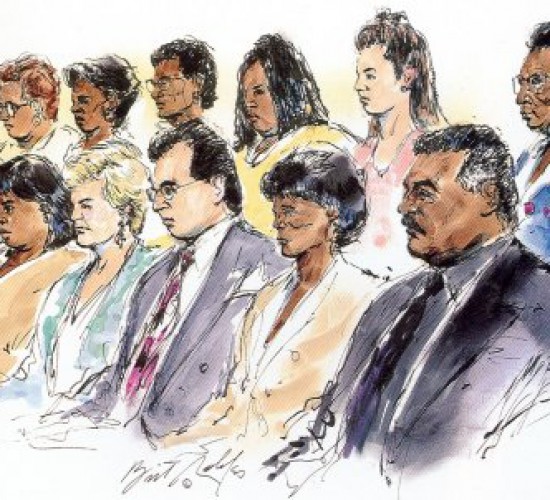
Law is not justice and a trial is not a scientific inquiry into truth. A trial is the resolution of a dispute.—Edison Haines
The real secret of magic lies in the performance.—David Copperfield
A. Overview
Trials, those oft long, theatrical, highly contentious happenings in courtrooms are intended to resolve disputes. Certainly, in civil matters how one defines a successful resolution is frequently biased as to the party defining the term. Regardless of how one defines it, the common denominator in any dispute is that both sides seek to win.
Edison Haines’s quote above is telling. Each party desires to have a dispute resolved, and resolved in the manner they desire. So how does one win? Truth may, or may not, have some role in the matter. Commonly, one or both sides employ legal representation to assist them. In addition to the traditional skills employed by lawyers, many share the skillsets utilized for hundreds of years by
entertainers that we know as magicians. But unlike magicians, the courtroom is the venue for their performances.
Misdirection, misinformation, selective attention, ambiguity, verbal manipulation, body language interpretation, and physical manipulation are all basic skills practiced, honed, and employed by magicians. Many of these techniques have been equally mastered by some of the greatest trial lawyers in their constant quest to win.
* * *
Many factors influence individuals. Words, actions, connections and context can all influence responses elicited from witnesses in a courtroom setting. When words lawyers use in a courtroom to craft questions, make arguments or otherwise describe events influence witnesses, ultimately decisions may be impacted. Similarly, the words of a magician impact how the spectator reacts to a trick.
The magician James Randi once said, “[a]llow people to make [an] assumption[] and they will come away absolutely convinced that assumption was correct and that it represents fact. It’s not necessarily so.” And, as Dr. Charles Reichardt noted, to “ ‘interpret answers to questions, you need to know exactly how the questions were asked.’ ” Dr. Kathy Kellermann concluded
that “[q]uestions do more than convey and solicit information. Questions put words in people’s mouths.”
In the most important arena—that of our courts—because words, actions, and connections do make a difference, the question becomes how to countermand these phenomena in a meaningful way so that, to the extent possible, the truth at trial reflects the actual truth. Some changes to the rules, education of trial lawyers to become aware of these tools and the education of witnesses might provide some, albeit not necessarily enough, countermeasures.
Read original articleTags:


