Menu
News

Houston Appeals Court Compels Gas Delivery Dispute to Arbitration
May 9, 2013
Houston’s First Appellate District has compelled a dispute over a natural gas delivery contract to arbitration despite...
May 9, 2013
Houston’s First Appellate District has compelled a dispute over a natural gas delivery contract to arbitration despite...
Strong Financial Laws Without Strong Enforcement: Is Good Law Always Better than No Law?
May 9, 2013
This article examines whether strong laws are effective when regulatory institutions are weak. This has become especially relevant due to criticisms of financial market regulation in the United States. I test the impact of imposing strong laws on a weak regulatory environment by using China's principled reforms to market manipulation law as a natural experiment. The results from difference-in-difference tests suggest that China's principled law reforms did not improve the market's information environment,...
May 9, 2013
This article examines whether strong laws are effective when regulatory institutions are weak. This has become especially relevant due to criticisms of financial market regulation in the United States. I test the impact of imposing strong laws on a weak regulatory environment by using China's principled reforms to market manipulation law as a natural experiment. The results from difference-in-difference tests suggest that China's principled law reforms did not improve the market's information environment,...
Are We on the Cusp of Major Changes to E-Discovery Rules?
May 8, 2013
By this time next year, we may be on the cusp of another major set of amendments to the discovery provisions of the Federal Rules of Civil Procedure. The United States Courts' Advisory Committee on Civil Rules voted last week to send a slate of proposed amendments up the rulemaking chain, to its Standing Committee on Rules of Practice and Procedure, with a recommendation that the proposals be approved for publication and public comment later this year. The most significant — and controversial...
May 8, 2013
By this time next year, we may be on the cusp of another major set of amendments to the discovery provisions of the Federal Rules of Civil Procedure. The United States Courts' Advisory Committee on Civil Rules voted last week to send a slate of proposed amendments up the rulemaking chain, to its Standing Committee on Rules of Practice and Procedure, with a recommendation that the proposals be approved for publication and public comment later this year. The most significant — and controversial...

LegalVIEW Data Shows Litigation Up, Legal Spend Down
May 8, 2013
The two hottest litigation areas these days are wage-and-hour and regulatory/compliance cases, according to legal data expert...
May 8, 2013
The two hottest litigation areas these days are wage-and-hour and regulatory/compliance cases, according to legal data expert...

Do Jurors Give Appropriate Weight to Forensic Identification Evidence?
May 8, 2013
Do jurors give appropriate weight to forensic identification evidence? When judging the value of forensic evidence, are they...
May 8, 2013
Do jurors give appropriate weight to forensic identification evidence? When judging the value of forensic evidence, are they...
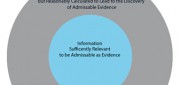
Federal Discovery Proposals Would Further Limit Depositions, Emphasize Proportionality
May 8, 2013
Proposed amendments to the Federal Rules of Civil Procedure aim to reduce the burden of discovery. The proposals set lower...
May 8, 2013
Proposed amendments to the Federal Rules of Civil Procedure aim to reduce the burden of discovery. The proposals set lower...
It’s Your Blog; Don’t Ask Me How It’s Doing
May 7, 2013
The managing partner of a law firm called me and asked my opinion of how his firm’s blog was doing. This struck me as an odd question. After all, wouldn’t he know this better than I? So I put the question back to him. “How do you think your blog is doing?” I asked. “I have no idea,” he answered. “Well, how has the traffic been?” I asked. “I have no idea,” he answered. “Has it generated any contacts?” I asked. “I don’t know,” he answered. “Are you getting...
May 7, 2013
The managing partner of a law firm called me and asked my opinion of how his firm’s blog was doing. This struck me as an odd question. After all, wouldn’t he know this better than I? So I put the question back to him. “How do you think your blog is doing?” I asked. “I have no idea,” he answered. “Well, how has the traffic been?” I asked. “I have no idea,” he answered. “Has it generated any contacts?” I asked. “I don’t know,” he answered. “Are you getting...
Standardizing Efficiencies in Business Litigation
May 7, 2013
The past 20 years have transformed business litigation. We have witnessed a perfect storm of expanding legal issues, contracting budgets, and clogging dockets. The deluge of discovery issues involving digital devices and social media threatens to overwhelm the system. Attorneys and the courts have been asked to do more with less, and they have struggled to keep up. Reactive adjustments to these challenges have come in fits and starts, including rule changes, court experiments, and various pilot projects....
May 7, 2013
The past 20 years have transformed business litigation. We have witnessed a perfect storm of expanding legal issues, contracting budgets, and clogging dockets. The deluge of discovery issues involving digital devices and social media threatens to overwhelm the system. Attorneys and the courts have been asked to do more with less, and they have struggled to keep up. Reactive adjustments to these challenges have come in fits and starts, including rule changes, court experiments, and various pilot projects....

Strategies for Negotiating More Rationally
May 7, 2013
In past articles, we have highlighted a variety of psychological biases that affect negotiators, many of which spring from...
May 7, 2013
In past articles, we have highlighted a variety of psychological biases that affect negotiators, many of which spring from...
Building a Taxonomy of Litigation: Clusters of Causes of Action in Federal Complaints
May 7, 2013
This project empirically explores civil litigation from its inception by examining the content of civil complaints. We utilize spectral cluster analysis on a newly compiled federal district court data set of causes of action in complaints to illustrate the relationship of legal claims to one another, the broader composition of lawsuits in trial courts, and the breadth of pleading in individual complaints. Our results shed light not only on the networks of legal theories in civil litigation but also...
May 7, 2013
This project empirically explores civil litigation from its inception by examining the content of civil complaints. We utilize spectral cluster analysis on a newly compiled federal district court data set of causes of action in complaints to illustrate the relationship of legal claims to one another, the broader composition of lawsuits in trial courts, and the breadth of pleading in individual complaints. Our results shed light not only on the networks of legal theories in civil litigation but also...