Menu
Neuroscience
Jet Lag May Disrupt Genes [Science!]
February 8, 2014
Disrupted gene activity may be the reason jet lag kicks our butts so badly according to research from a British university. They found that both jet lag and working nightshifts affected the activity of more than 1,500 genes. The Surrey University study looked at the levels of gene expression, in which a gene’s information is used to create either a protein or RNA, one of the most fundamental steps in the body’s operation. The study involved 22 people staying in an indoor facility where the lighting...

How Analytics Can Vastly Improve the Negotiation Process
February 7, 2014
Data plays a role in everything. And as we as a society collect more and more data, the ability to parse through it effectively...
February 7, 2014
Data plays a role in everything. And as we as a society collect more and more data, the ability to parse through it effectively...
Discovery of Quantum Vibrations Inside Brain Neurons Supports Controversial Theory of Consciousness
January 28, 2014
Recent evidence, though, from researchers led by Anirban Bandyopadhyay has found the proposed quantum vibrations inside microtubules within brain neurons. These microtubules are components of cell scaffolding–they help provide our cells with their structure–that are around 25µm in length. Other research has also found evidence of quantum coherence in living cells. It has been found in our sense of smell, in the parts of bird’s brains responsible for navigation and in plant photosynthesis. Hameroff...
When, and How, Should Cognitive Bias Matter to Law?
January 23, 2014
Recent work in the behavioral sciences asserts that we are subject to a variety of cognitive biases. For example, we mourn...
January 23, 2014
Recent work in the behavioral sciences asserts that we are subject to a variety of cognitive biases. For example, we mourn...
EDGE: Imagining Conflict Resolution
November 28, 2013
"The advantage of neuroscience is being able to look under the hood and see the mechanisms that actually create the thoughts and the behaviors that create and perpetuate conflict. Seems like it ought to be useful. That's the question that I'm asking myself right now, can science in general, or neuroscience in particular, be used to understand what drives conflict, what prevents reconciliation, why some interventions work for some people some of the time, and how to make and evaluate better ones."
The Scientific Study of Positive Emotion
November 28, 2013
What I'm really interested in is the science of human emotion. In particular, what's captivated my field and my interest the most is trying to understand positive emotions. Not only the ways in which perhaps we think they're beneficial for us or confer some sort of adaptive value, but actually the ways in which they may signal dysfunction and may not actually, in all circumstances and in all intensities, be good for us. I thought I'd first start briefly with a tale of positive emotion. It's a really...
Google Admits the Human Brain Still Beats an Algorithm
November 20, 2013
This past week, there was an old-school battle of wits that captured the world's attention: a chess championship. How quaint! A realm in which the human mind is still king, it was dubbed the most exciting chess championship in decades, with the 22-year-old chess sensation Magnus Carlsen, the "Mozart of chess," at work on the board while the titans of Wall Street hung on the edge of their seats—they claim it's pure interest in the beauty of chess; we imagine they have uses for Carlsen's brain...
Neuroscientists Develop Equation for Predicting Future Disasters
November 7, 2013
A team of neuroscientists has published a paper claiming it has developed a mathematical calculation that could potentially predict the tipping point of any massive event -- from a market crash to a brain seizure. Neuroscientists are used to working on systems of nodes, whereby one neuron in the brain ignites a stream of connected activity when activated -- a web-like chain reaction that unfolds in seemingly unpredictable ways. Of course, these can be predicted if you have the right information....
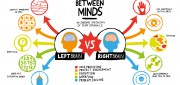
Forget Dated Ideas About Left and Right Hemispheres
October 30, 2013
Excerpt from "A New Map of How We Think: Top Brain/Bottom Brain" (Wall Street Journal), an article extracted from a forthcoming...
October 30, 2013
Excerpt from "A New Map of How We Think: Top Brain/Bottom Brain" (Wall Street Journal), an article extracted from a forthcoming...
Neuroplasticity and Education
October 10, 2013
I have written several posts concerning how important understanding how the mind works is on improving education and legal education (the neurobiology of learning). There will be a conference on this subject in Vancouver on October 25: Neuroplasticity and Education: Strengthening the Connection Conference Introduction: VANCOUVER, Sept. 24, 2013 /CNW/ - The brain is a beautiful organ. One that enables us to plan, problem solve, reason, interact, remember, forgive, forget, and a myriad...