Menu
Blog Archives

Court Declines to Compel Production of Backup Tapes, Active Emails in Native Format
July 9, 2015
United States ex rel. Carter v. Bridgepoint Educ., Inc., 305 F.R.D. 225 (S.D. Cal. 2015) In this case, the court addressed...
July 9, 2015
United States ex rel. Carter v. Bridgepoint Educ., Inc., 305 F.R.D. 225 (S.D. Cal. 2015) In this case, the court addressed...
Metaphors Can Be a Window into the Mind
July 9, 2015
Listening to the other party in a mediation or negotiation is key to resolving the issues between you. Whatever your assumptions, biases or preconceptions may be, you need to push them aside and focus on what the other party is saying. You need to understand them, what their goals are and why. By getting a good handle on their emotions you have a better chance at understanding them. Not only are the words used by the other party telling you their emotions, but the tools of language used will also...
July 9, 2015
Listening to the other party in a mediation or negotiation is key to resolving the issues between you. Whatever your assumptions, biases or preconceptions may be, you need to push them aside and focus on what the other party is saying. You need to understand them, what their goals are and why. By getting a good handle on their emotions you have a better chance at understanding them. Not only are the words used by the other party telling you their emotions, but the tools of language used will also...
To Enforce a Settlement, Jurisdiction Must Be Expressly Retained
July 9, 2015
The overwhelming majority of civil cases are resolved through settlement. However, the battle may not be over once the parties agree to settle their disputes. In Infinite Security Solutions, LLC v. Karam Properties II, Ltd., the Supreme Court of Ohio found that the premature dismissal of a case divested the court of jurisdiction and left the parties without the ability to seek court intervention to enforce the terms of the settlement agreement. Background Leading to Settlement An Ohio trial...
July 9, 2015
The overwhelming majority of civil cases are resolved through settlement. However, the battle may not be over once the parties agree to settle their disputes. In Infinite Security Solutions, LLC v. Karam Properties II, Ltd., the Supreme Court of Ohio found that the premature dismissal of a case divested the court of jurisdiction and left the parties without the ability to seek court intervention to enforce the terms of the settlement agreement. Background Leading to Settlement An Ohio trial...
Deep Down, Law Students Learn Like Cavemen, New Article Says
July 8, 2015
Millennials in law school are really just cavemen with smart phones. Or, more precisely, humans’ brain function and style of learning haven’t changed much over the last 50,000 years, not even for those so-called “digital natives” who have never known a world without computers and the Internet. This seems to be the prevailing theme of law professor James B. Levy’s new paper, “Teaching the Digital Caveman: Rethinking the Use of Classroom Technology in Law School,” published online...
July 8, 2015
Millennials in law school are really just cavemen with smart phones. Or, more precisely, humans’ brain function and style of learning haven’t changed much over the last 50,000 years, not even for those so-called “digital natives” who have never known a world without computers and the Internet. This seems to be the prevailing theme of law professor James B. Levy’s new paper, “Teaching the Digital Caveman: Rethinking the Use of Classroom Technology in Law School,” published online...
After the West Coast Ports Conflict, Damage Remains
July 8, 2015
To alleviate crisis negotiations, keep them from escalating in the first place. No one wants to engage in crisis negotiations. When parties need to hurriedly work out a solution to a shared problem, time is short, tempers are frayed, and the disaster is looming. Feeling they’ve exhausted good-faith bargaining, parties in crisis negotiations may believe they face an impossible choice between caving in to the other side’s demands or standing firm and watching the worst-case scenario unfold. That...
July 8, 2015
To alleviate crisis negotiations, keep them from escalating in the first place. No one wants to engage in crisis negotiations. When parties need to hurriedly work out a solution to a shared problem, time is short, tempers are frayed, and the disaster is looming. Feeling they’ve exhausted good-faith bargaining, parties in crisis negotiations may believe they face an impossible choice between caving in to the other side’s demands or standing firm and watching the worst-case scenario unfold. That...
How to Know If You Talk Too Much
July 8, 2015
You may have heard the saying, “When you’re in love, smoke gets in your eyes.” Well when you’re talking, smoke gets in your eyes and ears. Once you’re on a roll, it’s very easy to not notice that you’ve worn out your welcome. You may not even realize that the other person is politely trying to get a word in, or subtly signaling that they need to be elsewhere (possibly, anywhere else if you have been really boring). There are three stages of speaking to other people. In the first...
July 8, 2015
You may have heard the saying, “When you’re in love, smoke gets in your eyes.” Well when you’re talking, smoke gets in your eyes and ears. Once you’re on a roll, it’s very easy to not notice that you’ve worn out your welcome. You may not even realize that the other person is politely trying to get a word in, or subtly signaling that they need to be elsewhere (possibly, anywhere else if you have been really boring). There are three stages of speaking to other people. In the first...
Do Institutional Investors Value the Rule 10b-5 Private Right of Action?
July 7, 2015
In Morrison v. National Australia Bank Ltd., the US Supreme Court limited investors’ ability to bring private Rule 10b-5 securities fraud actions to cases involving securities purchased on a US stock exchange or otherwise purchased in the United States. Because many foreign firms’ securities trade simultaneously on non-US venues and on US exchanges, institutional investors claimed after Morrison that they would look to such firms’ US-traded securities to preserve their rights under Rule 10b-5....
July 7, 2015
In Morrison v. National Australia Bank Ltd., the US Supreme Court limited investors’ ability to bring private Rule 10b-5 securities fraud actions to cases involving securities purchased on a US stock exchange or otherwise purchased in the United States. Because many foreign firms’ securities trade simultaneously on non-US venues and on US exchanges, institutional investors claimed after Morrison that they would look to such firms’ US-traded securities to preserve their rights under Rule 10b-5....

Which Arguments Are Winning On Appeals From Arbitration So Far In 2015?
July 7, 2015
Today I present a collection of recent state and federal appellate court decisions that vacate or un-vacate arbitration awards....
July 7, 2015
Today I present a collection of recent state and federal appellate court decisions that vacate or un-vacate arbitration awards....
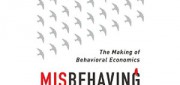
The Mischievous Science of Richard Thaler
July 7, 2015
Thaler has a mischievous mind. At the same time that he was producing his math-heavy dissertation, he started asking people...
July 7, 2015
Thaler has a mischievous mind. At the same time that he was producing his math-heavy dissertation, he started asking people...
Class Actions 101: Possible Amendments to Rule 23
July 6, 2015
Class action practitioners should pay close attention. The Rule 23 Subcommittee of the Advisory Committee on Civil Rules recently published its draft concept amendments to Rule 23, and they contain several potentially game-changing proposals. See Rule 23 Subcommittee Report, in Agenda Book for Advisory Committee on Civil Rules, Washington, D.C., April 9–10, 2015, at 243–297. The subcommittee says that, although these concept amendments remain "preliminary," it currently intends to present draft...
July 6, 2015
Class action practitioners should pay close attention. The Rule 23 Subcommittee of the Advisory Committee on Civil Rules recently published its draft concept amendments to Rule 23, and they contain several potentially game-changing proposals. See Rule 23 Subcommittee Report, in Agenda Book for Advisory Committee on Civil Rules, Washington, D.C., April 9–10, 2015, at 243–297. The subcommittee says that, although these concept amendments remain "preliminary," it currently intends to present draft...