Which System Would the Jury Use?
This post has been viewed 2,791 times.
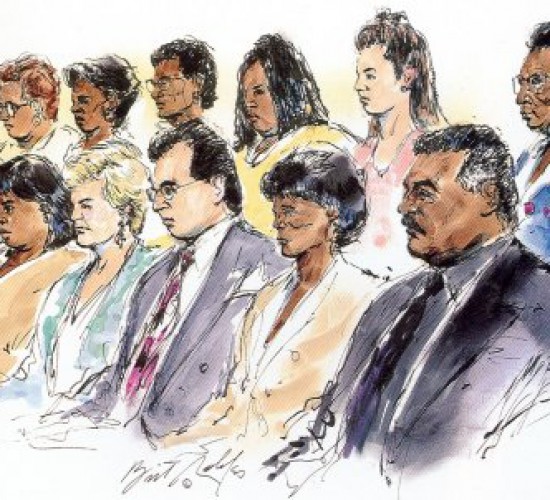
If you have been reading my blogs, you know that I am interested in neuroscience and the notion as discussed by Daniel Kahneman in his book Thinking Fast and Slow that we have two systems of thought : System 1 which we use to get through the day; it is intuitive, fast, emotional, automatic and subconscious and relies on heuristics and cognitive biases to get us through our lives; and System 2, which we use when we REALLY have to think about something; it is slow, deliberate, effortful, logical, conscious, and requires us to use up quite a lot of glucose. (That is why we are so “tired” after a day of thinking and analyzing or other mental activity!)
Recently I conducted a mediation in which I realized that if the matter were tried before a jury, the result would depend on whether the jury as a collective whole was using System 1 or System 2 in determining the verdict. Surprisingly, the parties agreed with my analysis. (The matter has not yet settled and so a jury determination is still a very real possibility.)
The case was a products liability action in which an oven caught fire causing a lot of damage to the home. Generally, to win a products liability action, one must show that there was a defect either in the design or in the manufacture of the part or product at issue. In the case I mediated, Plaintiffs contended that the oven overheated during the self-cleaning process and the thermal circuit breaker did not shut it off when it got above a certain temperature. That is, the fail safe mechanism or automatic shut off did not operate, thereby allowing the oven to overheat and catch fire. However, defendants contend that the thermal circuit breaker was working fine and did not malfunction. The defendants argue there was no “design” or “manufacturing” defect in the thermal circuit breaker and thus no “design” or “manufacturing” defect in the oven. The defendants argue that as there is no design or manufacturing defect, then plaintiff is not able to win on a products liability claim.
Read original articleTags: