How Likely Am I to Win? Risk, Uncertainty & the Turkey Illusion
This post has been viewed 2,536 times.
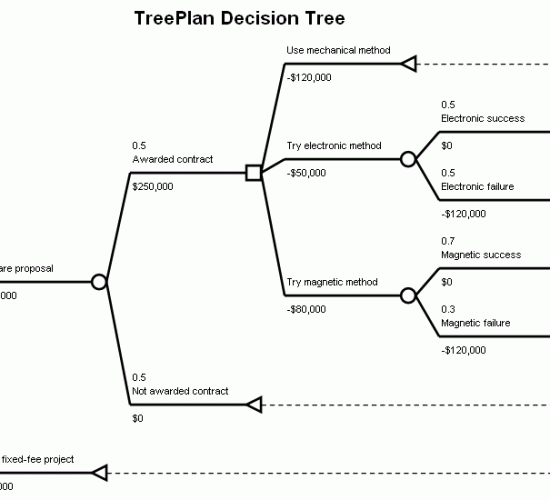
When parties are faced with an attractive settlement offer, they frequently wish to compare the offer to what they might get at trial, which is the product of the odds of winning times the value of the verdict or award. Naturally, they ask their lawyer “how likely am I to win?”
What kind of answer is called for? Answers to questions like this come in two flavors. Flavor one – you know the odds – is called decision-making under conditions of RISK. Flavor two – you don’t know the odds – is called decision-making under conditions of UNCERTAINTY. The two aren’t at all alike! The first is more like a slot machine or a lottery. The second is more like picking stocks, predicting earthquakes and making most business decisions. Confusing the one for the other can be a disaster.
In his brilliant book Risk Savvy, How to Make Good Decisions, prolific author and scientist Gerd Gigerenzer describes the dangers of confusing one kind of decision with the other. He says risks can be calculated when there is (1) low uncertainty – a predictable and stable situation (2) few alternatives – not too many factors to estimate (3) a high amount of data available to make these estimations.
Read original articleTags: